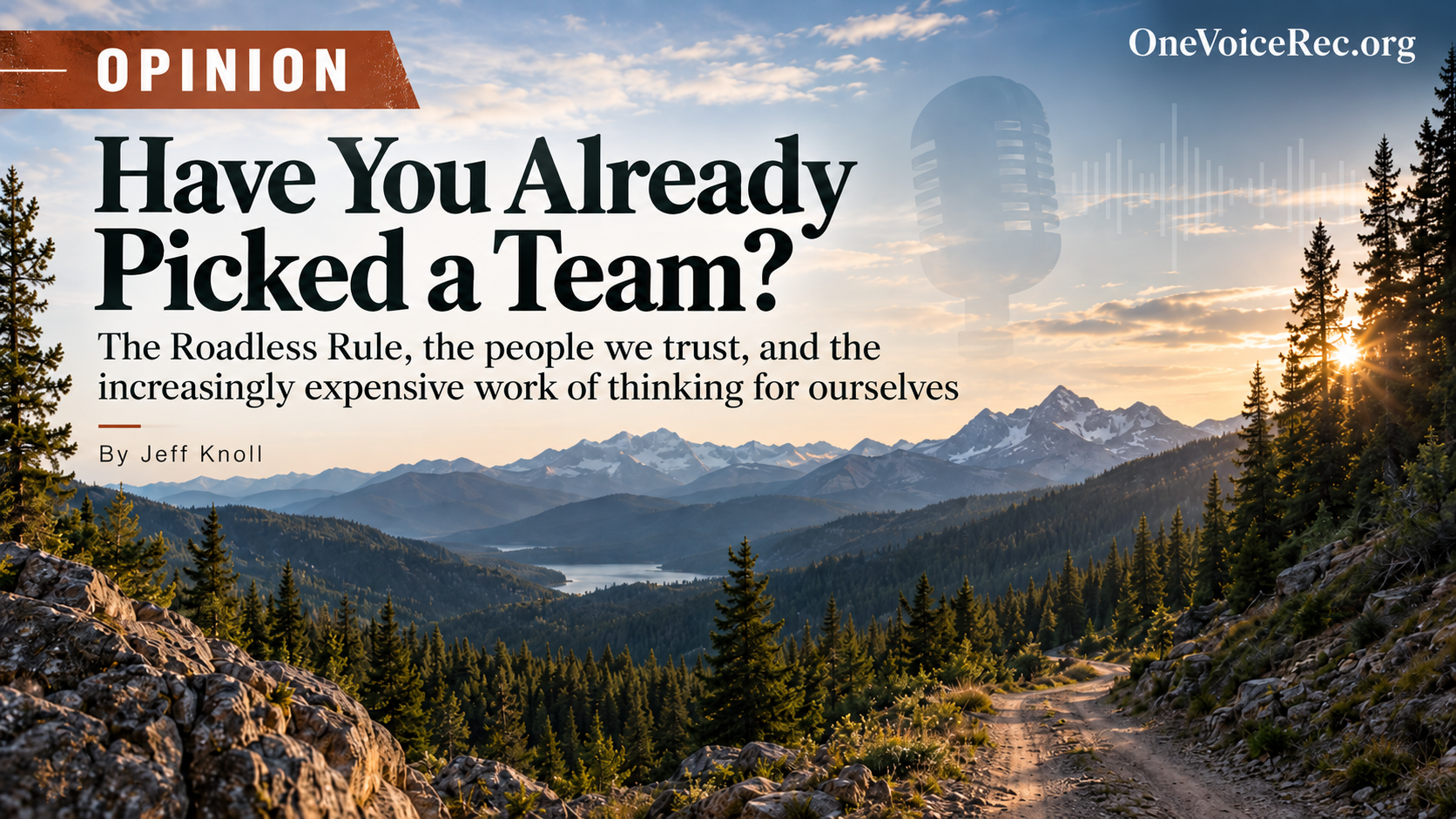
Opinion: Have You Already Picked a Team?
Public-land debates move fast, especially once social media turns complex policy into a choice between teams. Using the Roadless Rule as a case study, this opinion piece examines how credible voices, selective data, and simplified narratives can shape what we believe before we have taken the time to understand what is actually being proposed.
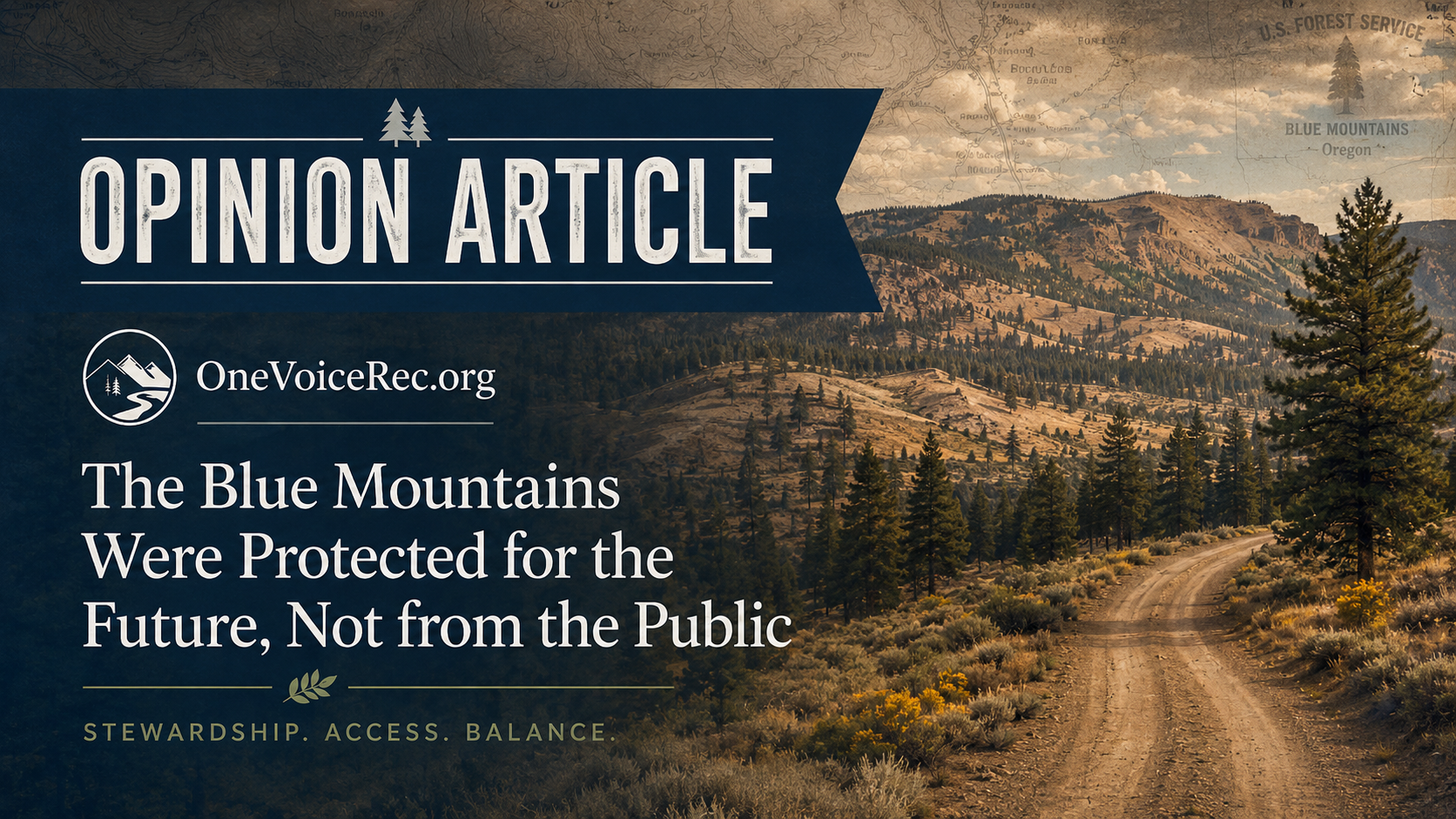
Opinion: The Blue Mountains Were Protected for the Future, Not from the Public
The Blue Mountains Forest Plan Revision is more than a federal planning document. It is a public-land literacy test for eastern Oregon and southeastern Washington. This opinion piece explores why healthy forests, meaningful access, wildfire mitigation, recreation, and accountability should not be treated as opposing goals. One Voice argues that the public should ask a simple question of every future restriction or management action: Did it work?
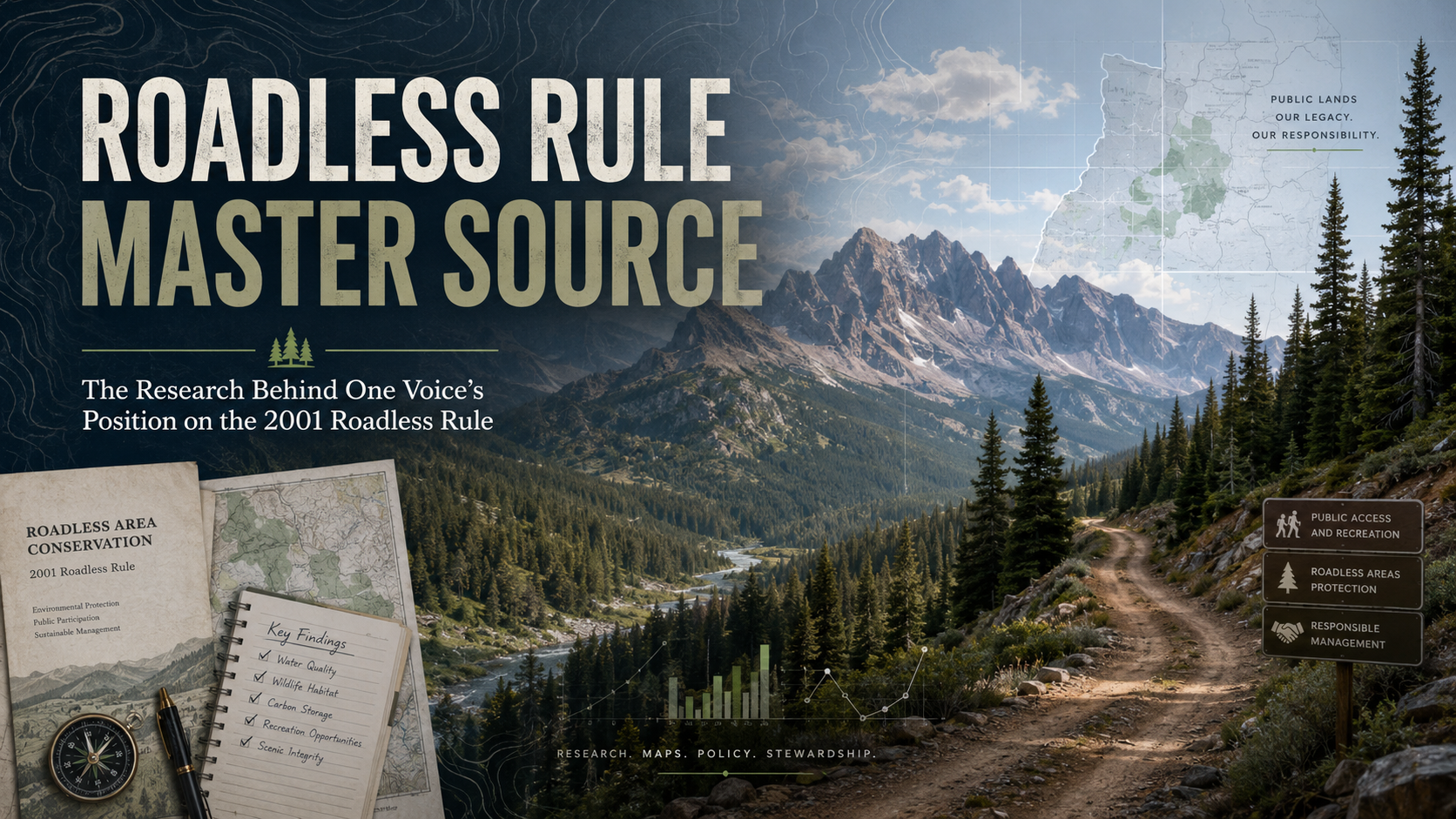
Roadless Rule Master Source The Research Behind One Voice's Position on the 2001 Roadless Rule
The Roadless Rule debate is often reduced to slogans, but the policy is far more complicated than its name suggests. One Voice’s Roadless Rule Master Source Compendium brings together the government records, wildfire research, recreation data, historical documents, economic analysis and advocacy history behind our position. It also examines what an Inventoried Roadless Area actually is, why “roadless” does not necessarily mean road-free, and what rescission would—and would not—change. This is the factual foundation for our work on the 2001 Roadless Rule.
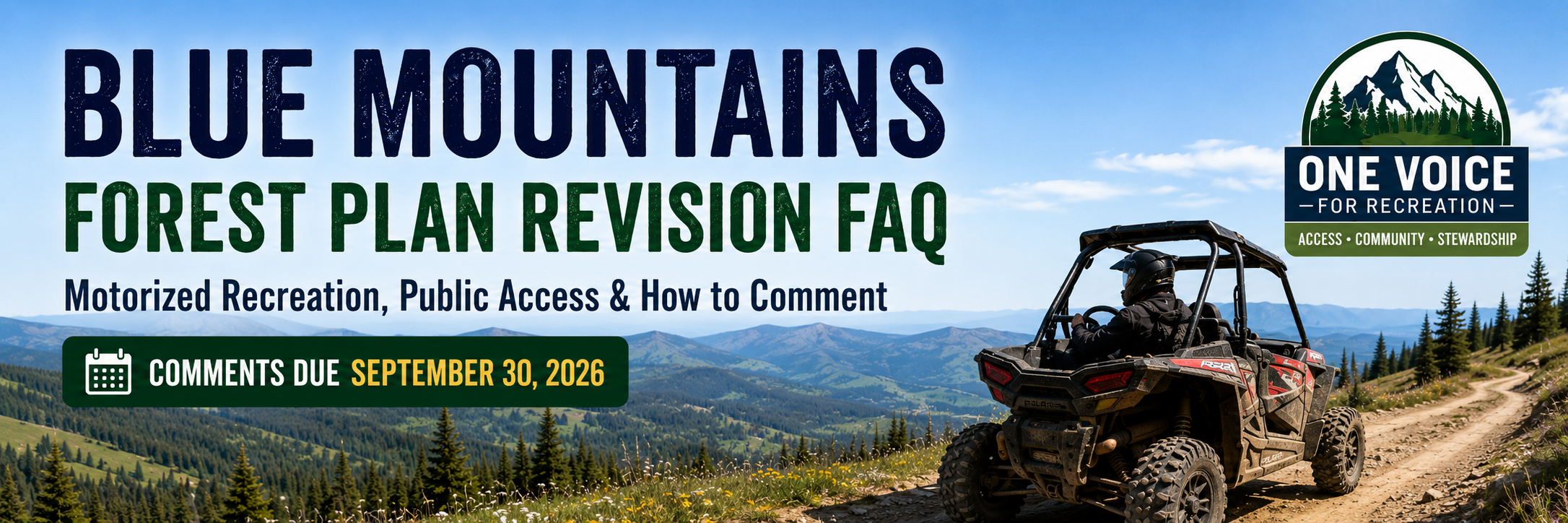
Blue Mountains Forest Plan Revision FAQ: Motorized Recreation, Public Access and How to Comment
The Blue Mountains Forest Plan Revision will guide management across nearly 4.9 million acres of the Malheur, Umatilla, and Wallowa-Whitman National Forests. This One Voice FAQ explains what the plan does—and does not do—how it may affect motorized recreation and future access, where the alternatives differ, why Oregon recreation planning matters, and how to submit a substantive comment that preserves your ability to object later.
Comments are due September 30, 2026.
Travel Managment Rule Update
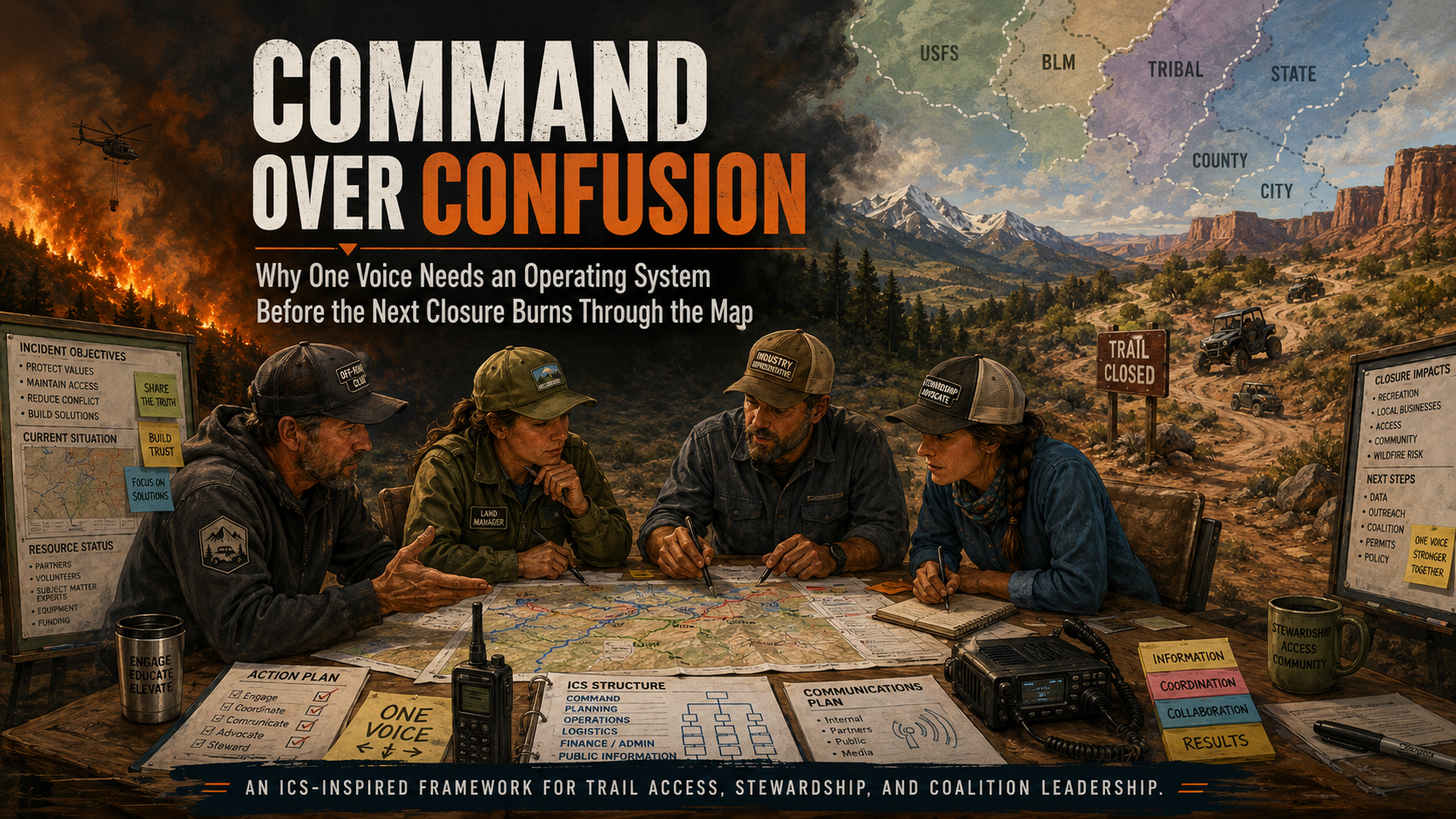
Command Over Confusion
Inside Unified Command, parties agree to operate from a shared picture of reality. The National Park Service describes Unified Command as an ICS application used when more than one agency has jurisdiction, allowing agencies to work together to establish common objectives, common strategies, and a single Incident Action Plan. A trail closure crossing multiple interests needs the same discipline.
The land manager keeps authority. The local club keeps ground truth. The legal advocate keeps the legal lane. The stewardship partner keeps credibility. Industry keeps economic weight.
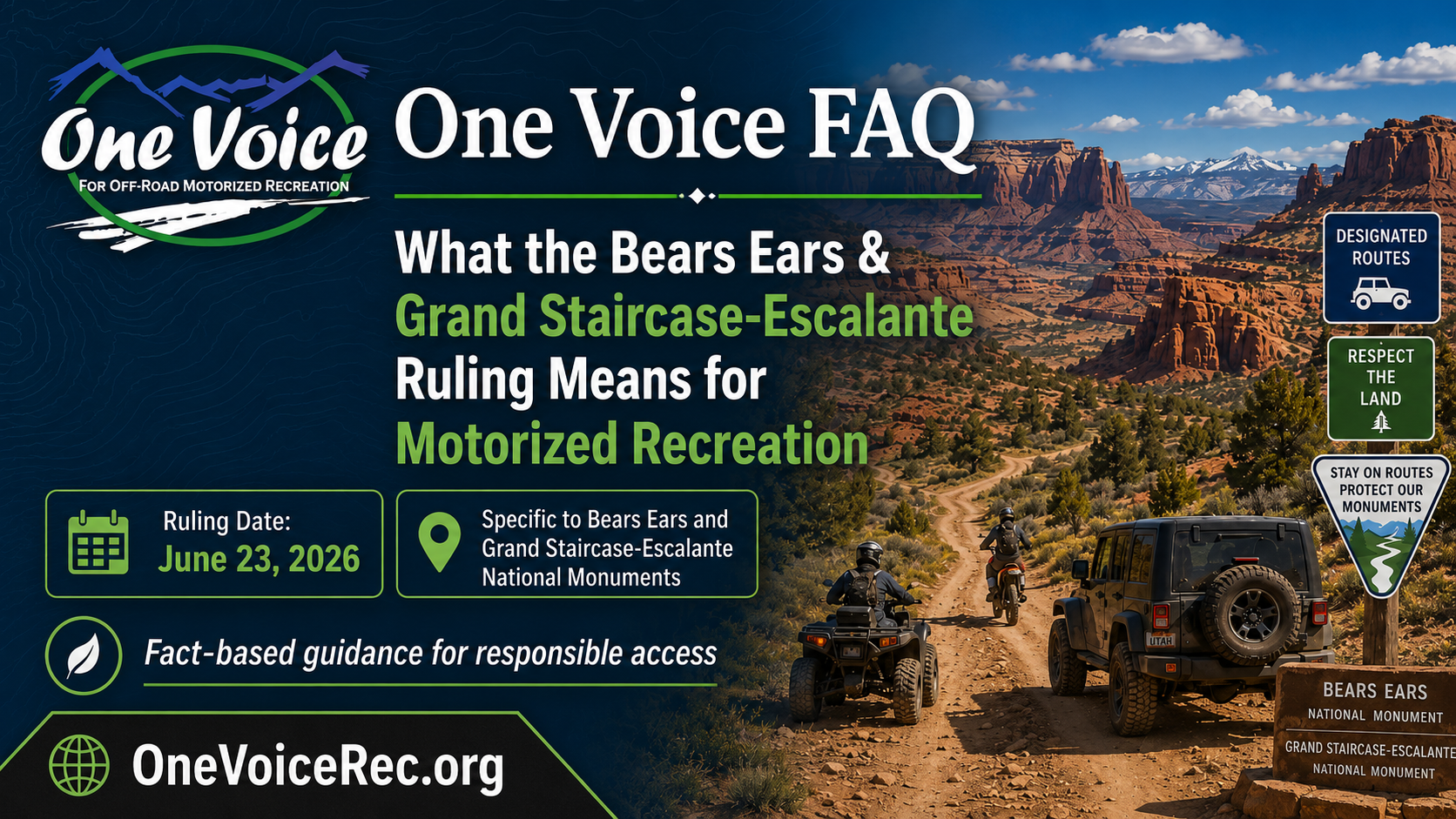
One Voice FAQ:What the Tenth Circuit Ruling on Bears Ears and Grand Staircase-Escalante Means for Motorized Recreation
The Tenth Circuit did not reopen Bears Ears or Grand Staircase-Escalante to motorized travel, but it did reopen an important legal question.
On June 23, 2026, the court revived Utah’s challenge to the 2021 monument proclamations and sent the case back to district court. Current boundaries, road closures, travel maps, and agency rules still apply.
For motorized recreation advocates, the takeaway is simple: stay on designated routes, document access impacts, and stay engaged. This ruling is not a final victory, but it does put the limits of the Antiquities Act back in play.
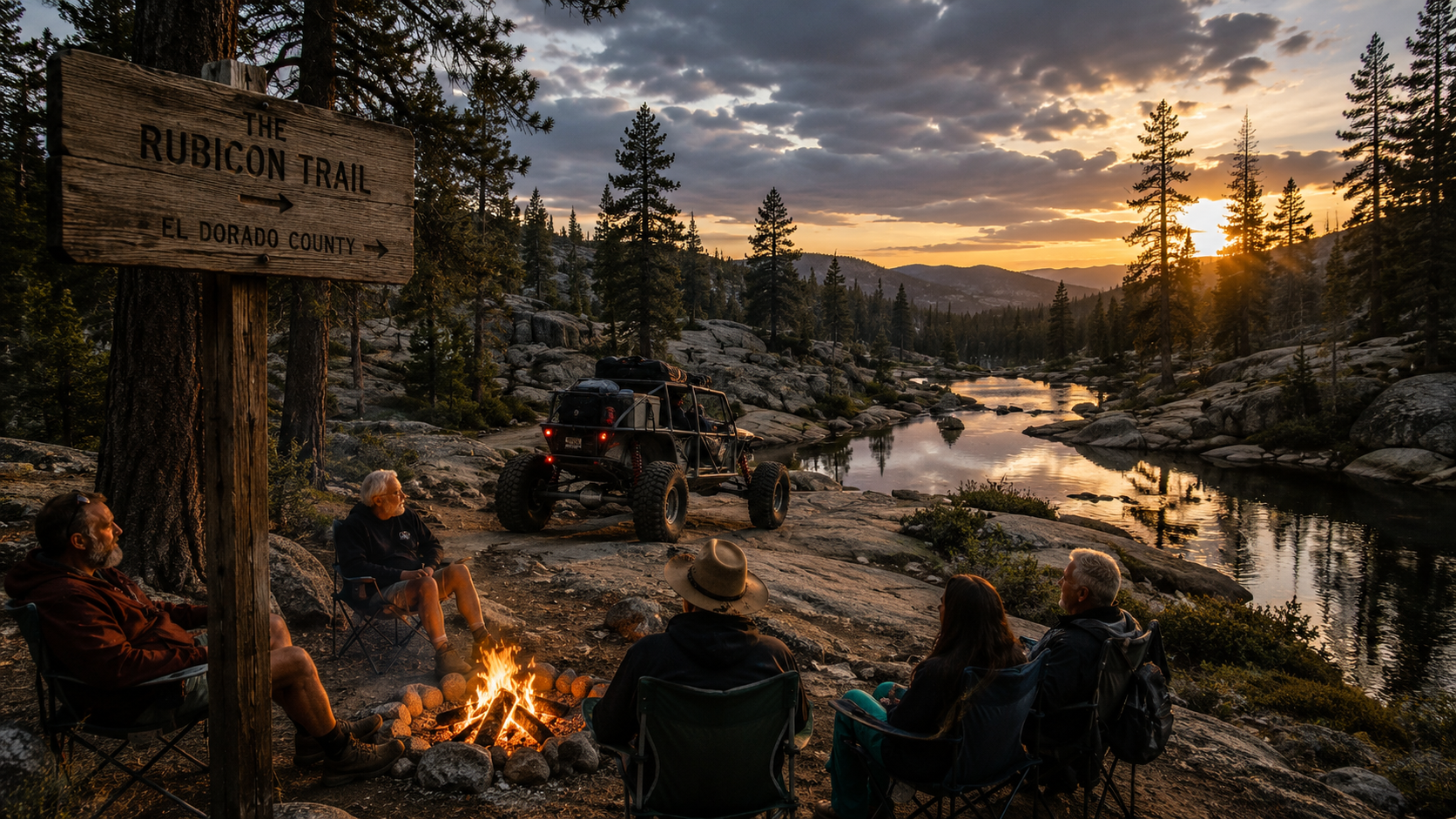
The Trail We Leave Behind
The Rubicon Trail is on loan from our grandchildren.
That sentence has been following me around ever since I finished the trail. It keeps changing the way I look at things. If the trail is only on loan, then every volunteer weekend becomes a payment on a debt. Every newcomer we welcome instead of ridiculing becomes an investment. Every time we choose patience over performance, conversation over condemnation, or stewardship over spectacle, we make another small investment toward a future we may never personally enjoy.
Great American State Fair
FOR IMMEDIATE RELEASE
One Voice Represents Motorized Recreation at the Great American State Fair as Part of U.S. Forest Service Display
WASHINGTON, D.C., July 6, 2026 — One Voice representatives were proud to participate in the Great American State Fair in Washington, D.C., spending three days representing motorized recreation as part of the U.S. Forest Service display.
The invitation provided One Voice with a valuable opportunity to engage directly with the public, U.S. Forest Service leadership, land managers, and recreation partners on issues affecting access, stewardship, emergency response, firefighting, timber management, and the future of responsible motorized recreation on public lands.
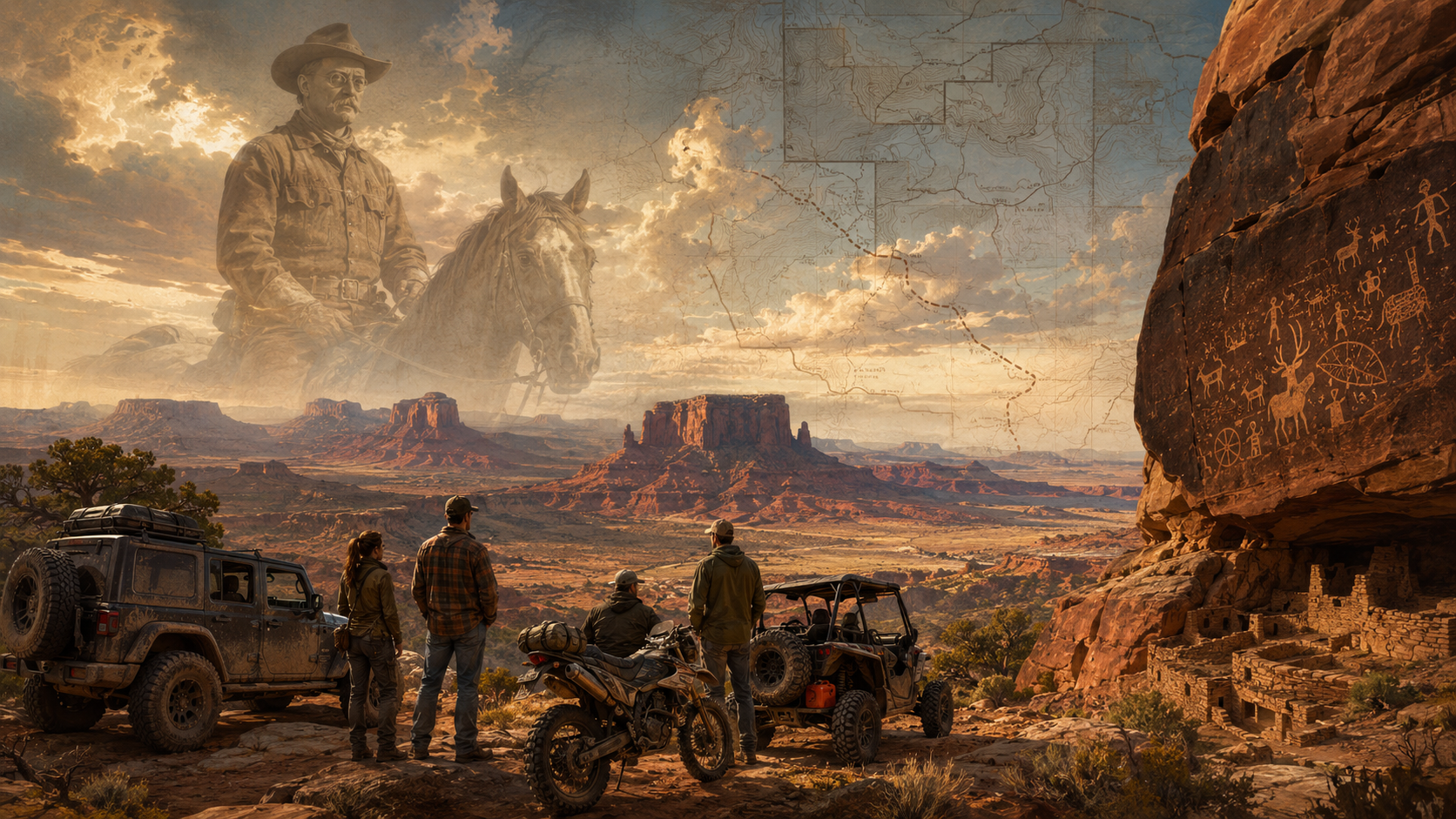
The Antiquities Act Still Means Something. The Question Is Whether We Are Honest Enough to Use It Well.
There are few things more American than a good argument over public land. We can turn a dirt road, a sandstone ridge, a cattle gate, a two-track, a petroglyph panel, a county commission meeting, and a federal register notice into a bar fight with footnotes. Give us a map and a little unclear authority, and we will divide ourselves into tribes faster than a campground fills up on Memorial Day weekend.
Somewhere in the middle of that fight sits the Antiquities Act of 1906, a short little law with long legs, sharp elbows, and a habit of walking into modern controversies wearing Theodore Roosevelt’s hat.
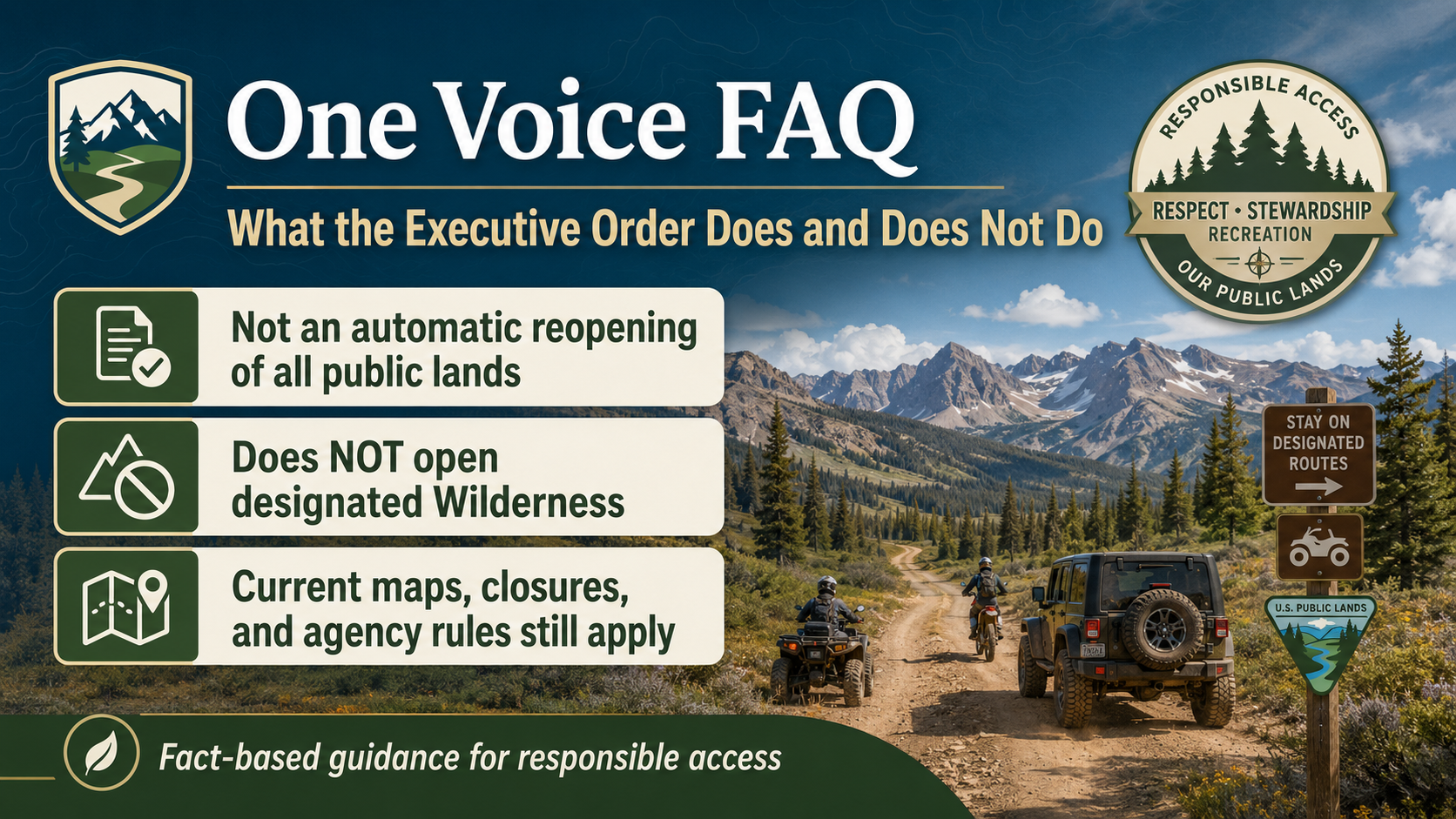
One Voice Executive order fact sheet
Frequently Asked Questions About the May 29 Executive Order on Off-Road Vehicle Access to Federal Public Lands
Purpose of this FAQ:
This document is intended to explain, in plain English, what the President’s recent Executive Order does, what it does not do, and how off-road vehicle access on federally managed public lands is governed. It is designed for public use, publication, reposting, and distribution by recreation organizations, clubs, media outlets, elected officials, agency partners, and the general public.
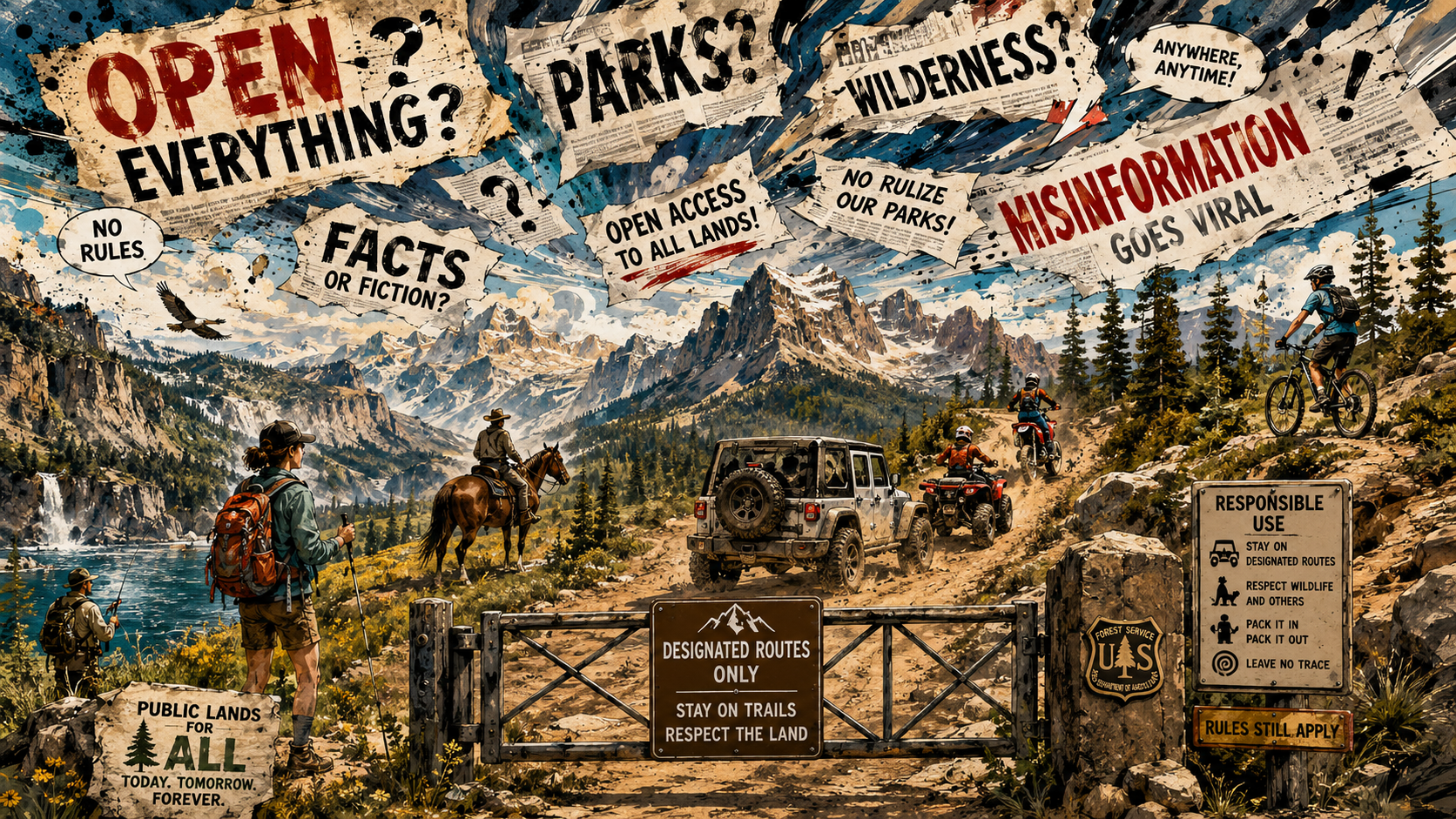
The Executive Order Did Not Open the Gates. It Opened the Conversation.
Public land debates often ignite quickly. A headline drops, a post spreads, an advocacy group amplifies the most dramatic version, and soon the public hears Jeeps, ATVs, dirt bikes, and side-by-sides have invaded Wilderness areas, National Parks, and every fragile ecosystem nationwide.
That is not what happened.
The President’s May 29 Executive Order rescinds Executive Orders 11644 (1972) and 11989 (1977), directing agencies to review and revise the regulations issued under them. The White House frames this as a move to remove unnecessary restrictions and responsibly expand access. This is a real policy shift; denying that misrepresents the administration's direction.
Equally important: the Executive Order does not automatically open every road, trail, park, recommended Wilderness, or sensitive habitat to off-road use.
This is not political spin; it is a matter of civics.
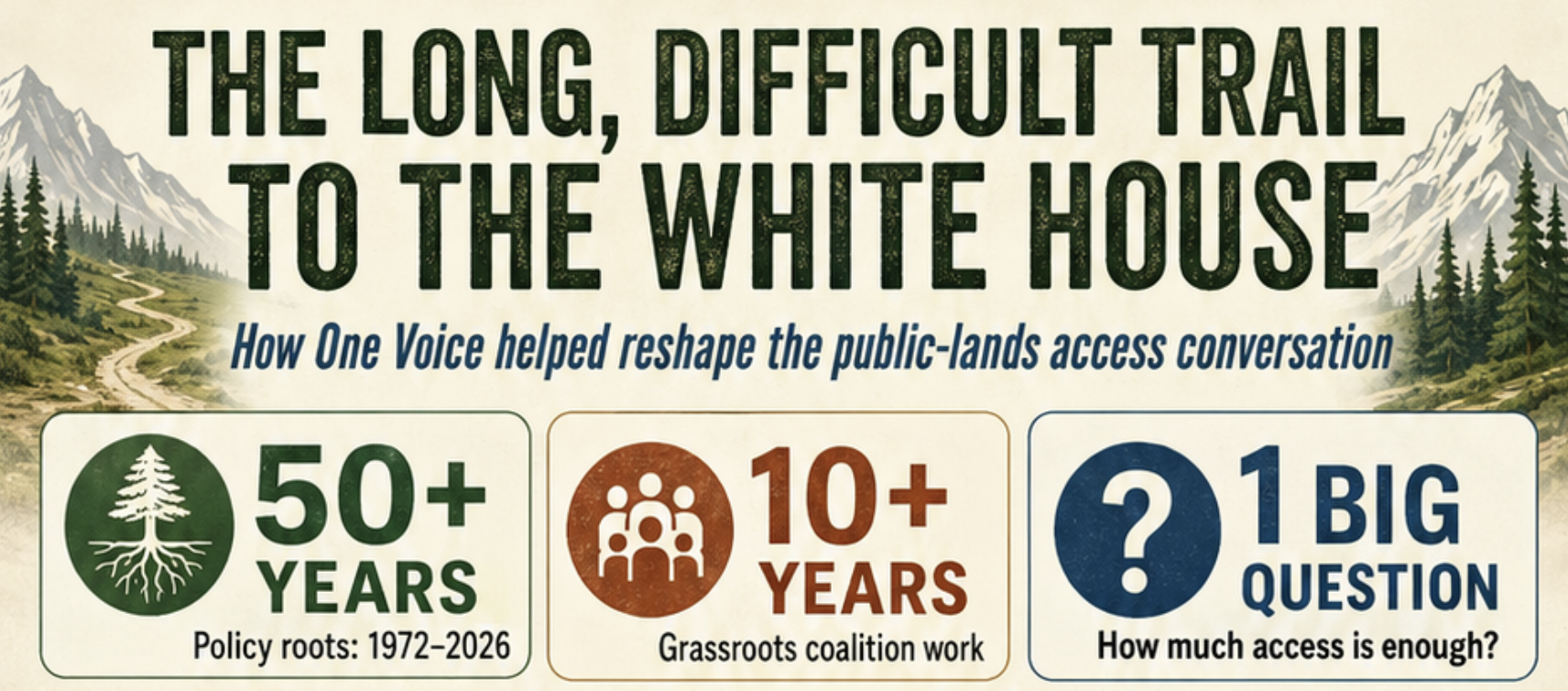
The Long, Difficult Trail to the White House
When President Donald Trump signed the Executive Order Removing Unnecessary and Counterproductive Restrictions on Access to Federal Lands on May 29, 2026, most observers saw a political event. Supporters celebrated. Critics objected. Pundits did what pundits do. The headlines focused on the White House and the implications for millions of acres of federal land across the American West.
What received far less attention was the journey that brought the issue to the President's desk in the first place.
The Executive Order did not emerge from nowhere. It was not the product of a single meeting, a single election, or a single administration. The story spans more than half a century, through three presidential administrations, countless public lands battles, and a decade-long grassroots effort led by a coalition of recreation advocates who eventually decided to challenge assumptions most people had long accepted as permanent.
Did the Off-Roaders Just Win the Biggest Public Lands Battle in Fifty Years?
If you spend enough time wandering the backroads of the American West, you begin to notice something peculiar. The roads almost never disappear all at once. No one arrives overnight with a gate and signs and erases a hundred years of history before breakfast. Instead, roads fade slowly, like an old cowboy whose stories become harder to hear each winter.
First comes a sign. Then, a seasonal closure. Then, a management plan, followed by a travel plan. A revision comes later. Year’s pass, and a gate appears where none existed before. The road is still there, winding toward the horizon as always. But now it exists in a strange bureaucratic purgatory. Maps disagree. Regulations multiply. The average citizen now needs the skills of a detective just to know if he can drive down a path his grandfather once traveled without a second thought.
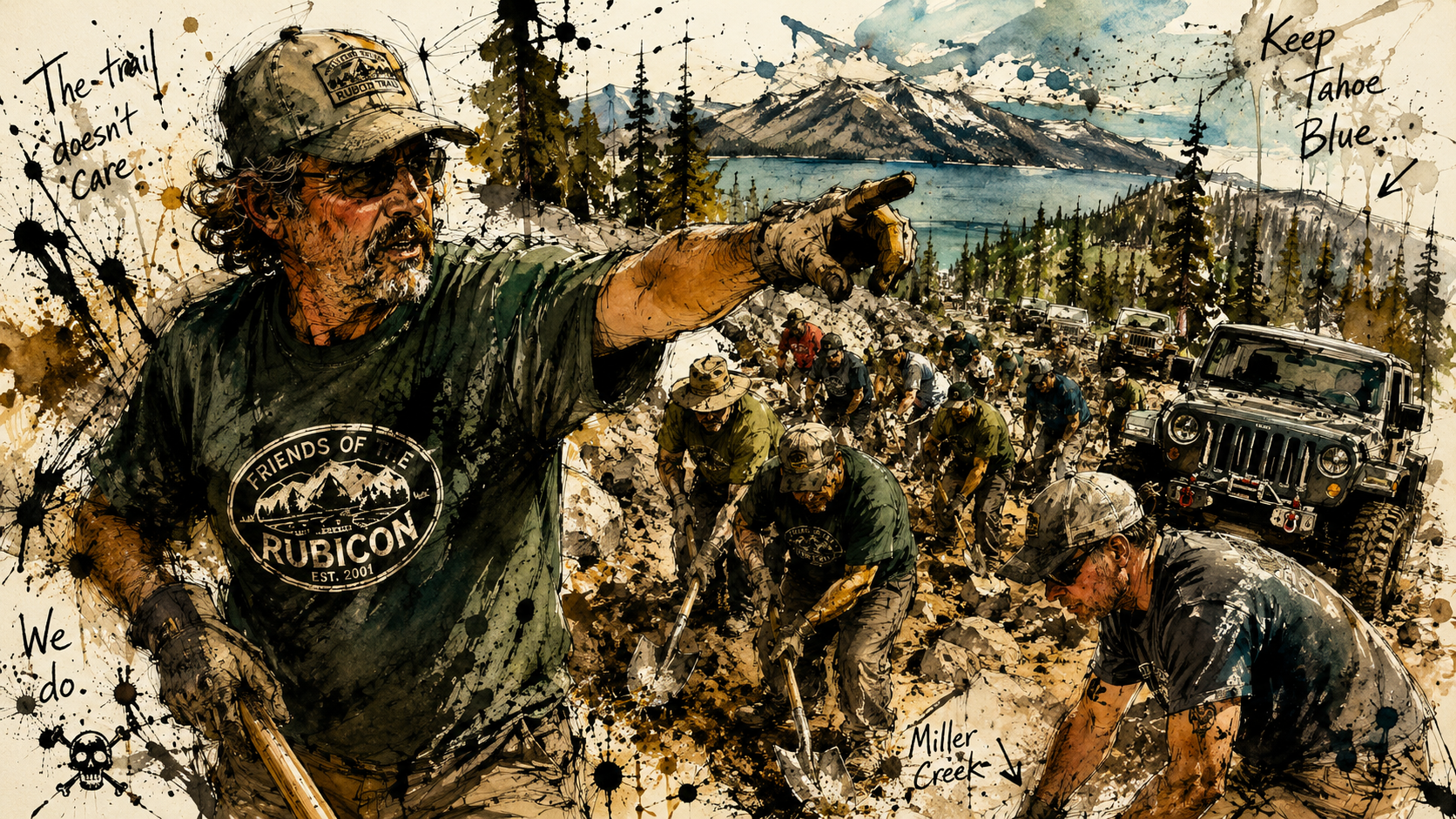
Granite, Water, and Shovels: Lessons from the Rubicon Trail
There is a certain kind of trail in the American West that refuses to behave like a line on a map. It bends around granite outcroppings and vanishes into timber, crossing cold creeks without ceremony and climbing into country where the mountains seem only reluctantly willing to tolerate human ambition. These are not roads in the modern sense. Roads belong to surveyors, engineers, and transportation departments. Trails like the Rubicon belong to weather, gravity, memory, and stubbornness. They are negotiated places. Temporary treaties scratched into landscapes by generations of people who return season after season, believing, against all evidence to the contrary, that the mountains may permit one more passage.
The Rubicon Trail has always carried a little of that spirit. Long before the modern arguments over recreation, access, and environmental management arrived with binders and acronyms, people came through this country because they wanted to see what was on the other side.
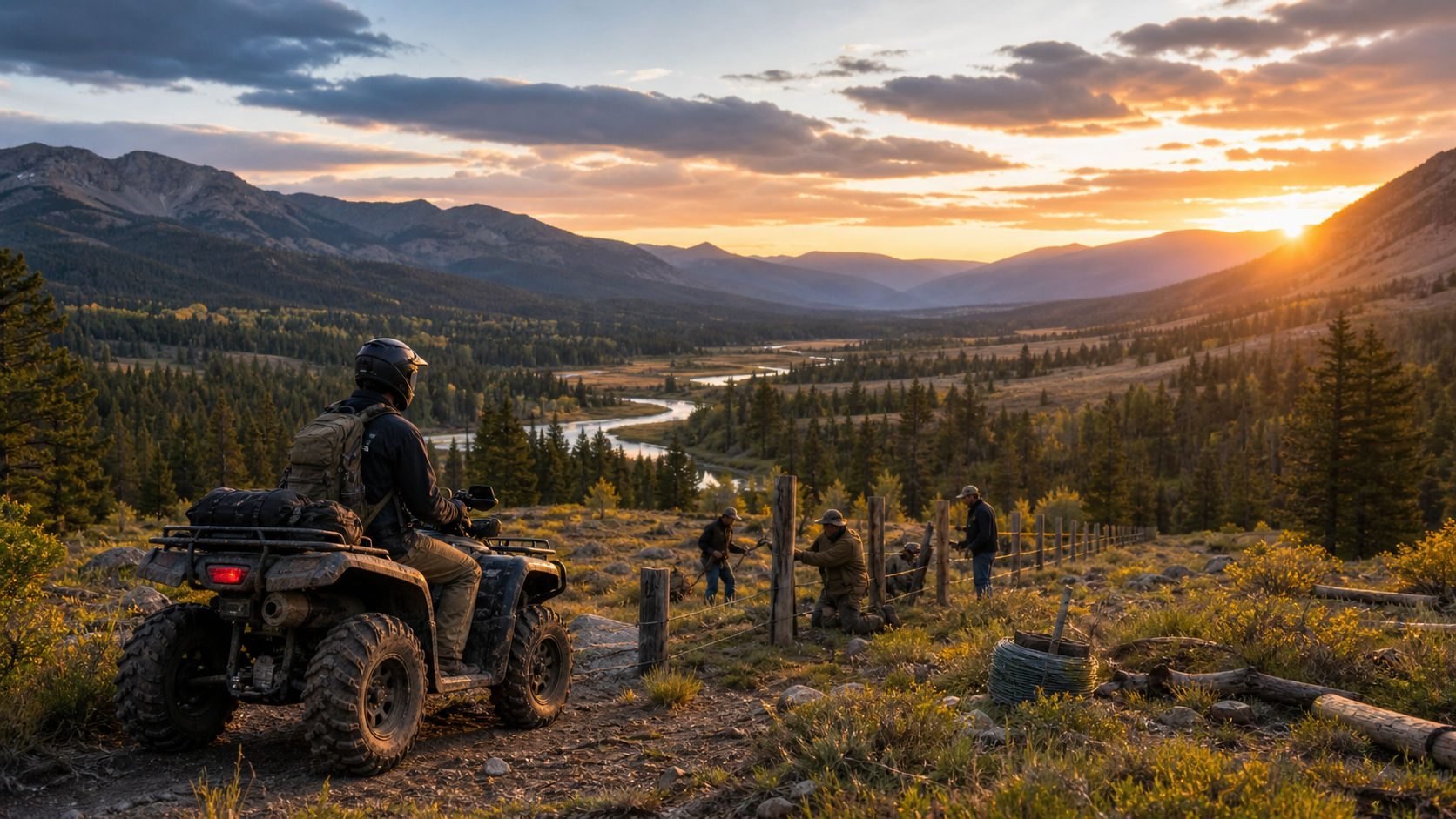
Who Pays for Conservation?
There is a persistent story people like to tell about conservation in the American West. It is tidy and reassuring. It begins somewhere in Washington, D.C., and flows downhill through agency headquarters and district offices. Finally, it arrives in the mountains where elk still cross the road at dusk, and rivers still decide their own direction. In this story, the federal government pays for conservation. The agencies administer conservation. The rest of us participate politely when asked. It is comforting because it suggests someone else is in charge of the landscape's future.
But comfort and truth are rarely traveling companions out here.
Is Motorized Recreation About to Gain the Upper Hand on America’s Public Lands?
This spring, rumors traveled quickly across the West, moving from ranger stations to county commissioner meetings to trailheads, where information and coffee are strong. Whispers of budget tightening and staff reductions set a new tone. When the story reached those who spend weekends maintaining trails and grooming mountain passes, the question evolved: Who remains able and willing to do the work when agencies run short on resources?
Anyone who has spent real time in the interior West knows that public land management depends less on speeches than on logistics. Philosophies change with administrations, but roads wash out, culverts collapse, signage disappears under snowdrifts, and somebody must clear a lodgepole blocking the only access to a drainage. For decades, we pretended federal land agencies could manage vast landscapes for values that did not pay for themselves. Scenic integrity does not buy diesel. Habitat connectivity does not repair bridges. Endangered species recovery does not fund grooming passes. These things matter deeply. Anyone who has watched a bull elk walk at dawn or listened to the silence of a winter canyon knows they matter for reasons that resist accounting. Even so, the arithmetic never vanished; it just waited.
People Don’t Want to Join. They Want to Belong.
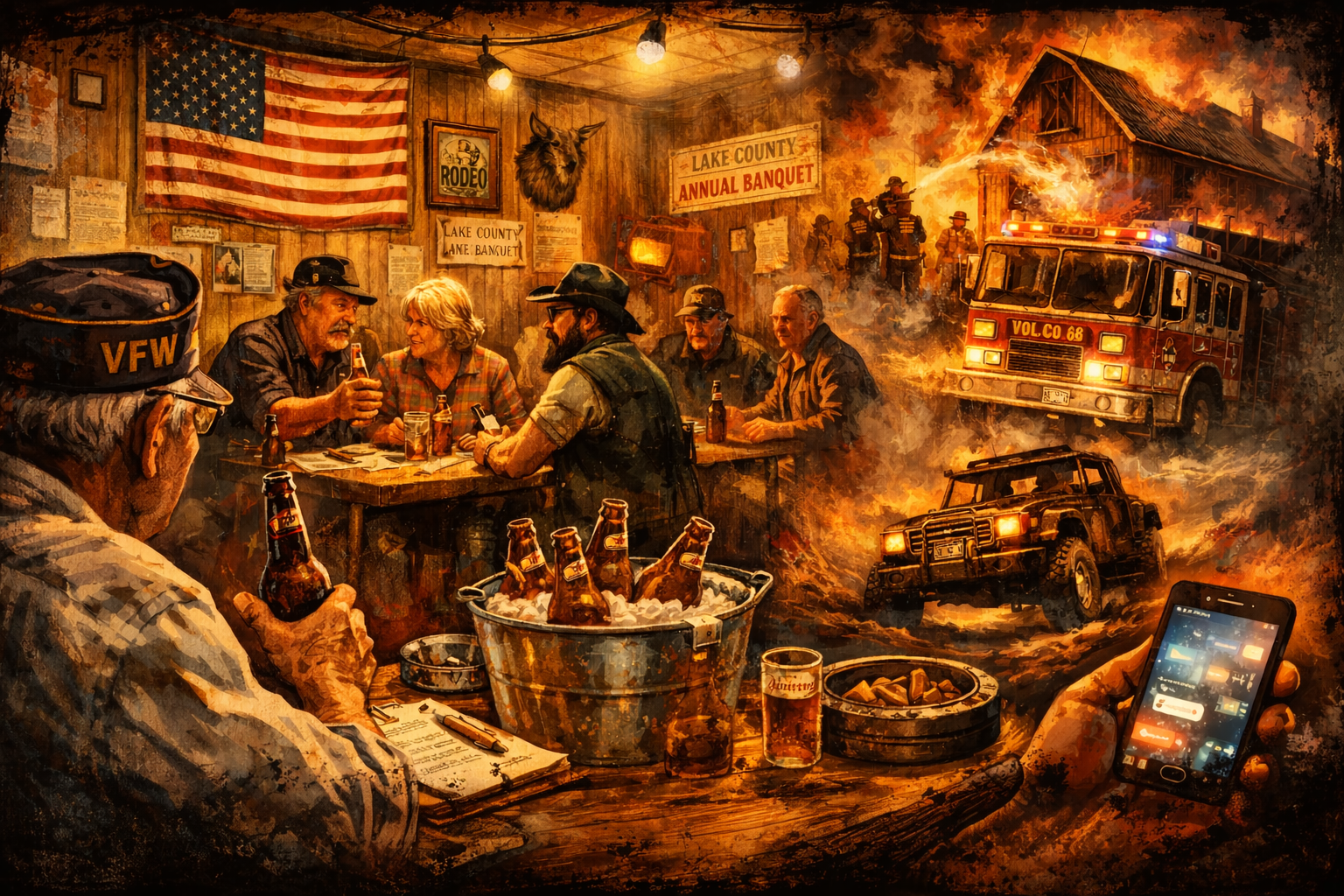
Last night, I sat in the Polson, Montana, VFW, often called the cheapest place to drink, just ahead of the Elks Lodge, which I also belong to. Inside, the American flag and wood paneling reflect decades of community, and the bartender’s prices show nobody’s there for profit.
The gathering was for the Polson Fairgrounds committee. The evening had the familiar mix of planning, socializing, and a shared reminder that a community survives where people show up.
Conversations circled around the rodeo, annual banquet, and the town events that hold the community together. A county commissioner stopped by—an event of local significance. People laughed, debated, and shared ideas for the good of their community.