Who Pays for Conservation?
Part 2: The Quiet Investors Already Holding the West Together
By Jeff Knoll
There is a persistent story people like to tell about conservation in the American West. It is tidy and reassuring. It begins somewhere in Washington, D.C., and flows downhill through agency headquarters and district offices. Finally, it arrives in the mountains where elk still cross the road at dusk, and rivers still decide their own direction. In this story, the federal government pays for conservation. The agencies administer conservation. The rest of us participate politely when asked. It is comforting because it suggests someone else is in charge of the landscape's future.
But comfort and truth are rarely traveling companions out here.
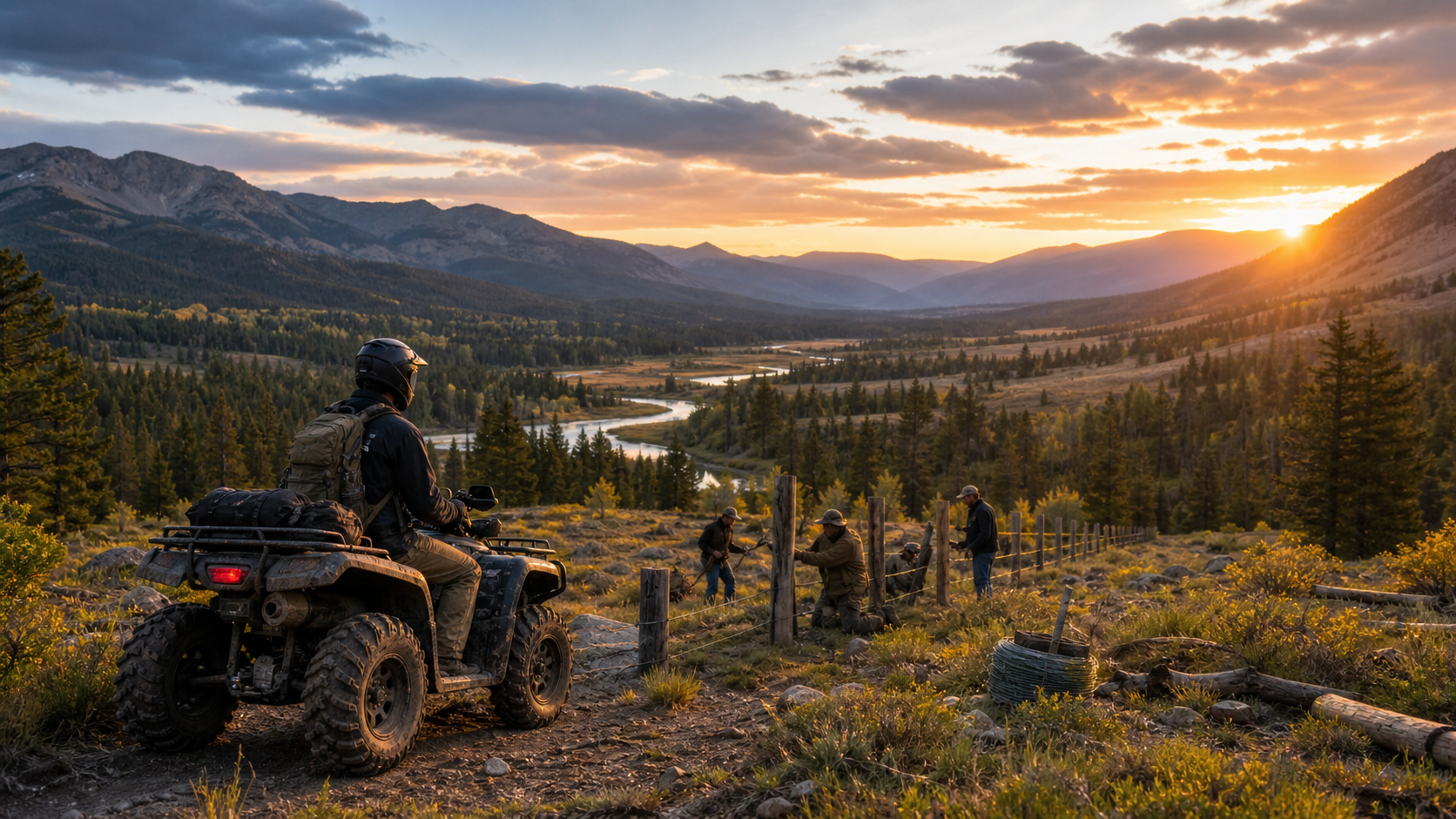
The Western Landowners Alliance released numbers this year that quietly rearranged the furniture in that story. They did so without asking anyone who preferred the old layout for permission. Across eleven western states, private landowners spent more than $400 million of their own money in a single year on conservation work. This spending did not come from grants, reimbursement programs, or regulatory obligations. It came from their own checkbooks, equipment, and labor. It was motivated by their belief that the ground beneath their boots was worth maintaining for another generation. That number alone should change the tone of every conversation right now. It reveals something agencies rarely say out loud: the landscape is already being financed by people who were never officially invited to the meeting.
Once you see that, the rest of the picture becomes uncomfortably clear. Range improvements alone accounted for over $100 million of that investment. Water systems followed close behind. Forest work and wildlife habitat projects filled in the rest. These are not gestures performed for optics or compliance paperwork. These are infrastructure decisions made by people who depend on functioning land the same way a pilot depends on lift. These are investments made by individuals who expect a return, not necessarily in cash. They want forage that still grows, soil that still holds, streams that still run, and migration corridors that still exist when the snow starts pushing animals downhill in October.
People take care of what they pay for, and the West has always been shaped by the people willing to pay for it.
Now, consider what is happening inside the Forest Service today. Something begins to shift in how the future looks. Budgets tighten quietly at first, then all at once. Staffing becomes thinner. Deferred maintenance accumulates like snow against an old fence line when nobody has time to shovel. The multiple-use mandate was never designed to operate without capacity. When capacity shrinks, the landscape does not wait for appropriations to catch up. Something else moves into that space. It is never announced as a transition. It just happens. Users begin carrying more responsibility. Partners begin carrying more responsibility. Investors begin carrying more responsibility.
This shift in responsibility directly affects the conversation about motorized recreation, bringing it into sharper focus than ever before.
For decades, agencies treated motorized users as something to manage. They did not see them as partners for collaboration. The assumption was always that access created impact. Impact required control. What was rarely acknowledged was that motorized recreation had already begun building its own funding mechanisms before anyone noticed. Snowmobile grooming systems learned to finance themselves. OHV sticker programs learned to finance themselves. Volunteer trail crews learned to maintain routes long before anyone asked them to. Outsiders sometimes dismissed their culture as recreational enthusiasm, but it quietly evolved into something closer to infrastructure stewardship. Infrastructure stewardship changes how institutions see you, whether they admit it or not.
The Western Landowners Alliance's numbers make that shift easier to see. They confirm what rural communities have understood for generations. Conservation in the West has never been a single-payer system. It has always been a hybrid economy. This economy is held together by working landscapes, user participation, private investment, and local responsibility. All of this is layered on top of federal management rather than replacing it. What is changing now is not the structure itself, but its visibility. As agencies enter a leaner operating environment, the partners already carrying weight become harder to ignore.
Another detail in the Alliance report deserves attention. Many landowners reported turning down income opportunities that would have produced immediate financial return to preserve habitat, connectivity, and long-term landscape stability. That is not compliance behavior. That is not incentive behavior. That is stewardship behavior rooted in identity rather than policy. People make these decisions when they believe the land is not just property but responsibility. Once you recognize this level of commitment already exists across the West, the question changes. It becomes whether our public land systems work with the support already there, not whether conservation has support or still needs to be invented.
All of this brings us back to the Forest Service, now facing strained resources and a need for new partnerships. As conservation relies more on private landowners, organized recreation communities, and partner organizations, the landscape suggests who the next generation of conservation partners will be.
Motorized recreation has spent decades learning to fund itself and organize itself. It maintains access corridors across vast terrain that agencies alone could never realistically manage without help. That experience does not make motorized users’ outsiders to conservation. It makes them participants in a stewardship economy that has operated in full view all along. The only thing changing now is that the balance sheet is finally visible to all.
So, when we ask who pays for conservation in the American West, the answer is not a single agency, program, or appropriations cycle. It is a network of landowners, working landscapes, volunteer trail crews, recreation systems, and communities. They have been quietly investing for years while the official narrative pretended conservation flowed from somewhere else. If the Forest Service enters a leaner chapter, the groups already carrying that investment may learn something. What they have been building all along was not just access, maintenance, or participation.
It was an influence.
Influence, once honestly earned on the ground, often appears at the policy table, whether planned or not. The time has come to claim that seat, work together, and lead conservation forward. What comes next depends on what we do—starting now.
Reprint Permission: This article may be shared or republished in full, provided it is reproduced exactly as originally published and includes the author’s byline. No edits, excerpts, rewrites, summaries, translations, artificial intelligence-generated versions, derivative works, or manipulated versions are permitted without prior written permission from the author.
By Jeff Knoll Find me on LinkedIn @ https://www.linkedin.com/in/jeff-knoll-b5632437/
Originally published at: https://www.onevoicerec.org/news
© 2026 Jeff Knoll. All rights reserved except as expressly permitted above.