Is Motorized Recreation About to Gain the Upper Hand on America’s Public Lands?
By Jeff Knoll
This spring, rumors traveled quickly across the West, moving from ranger stations to county commissioner meetings to trailheads, where information and coffee are strong. Whispers of budget tightening and staff reductions set a new tone. When the story reached those who spend weekends maintaining trails and grooming mountain passes, the question evolved: Who remains able and willing to do the work when agencies run short on resources?
Anyone who has spent real time in the interior West knows that public land management depends less on speeches than on logistics. Philosophies change with administrations, but roads wash out, culverts collapse, signage disappears under snowdrifts, and somebody must clear a lodgepole blocking the only access to a drainage. For decades, we pretended federal land agencies could manage vast landscapes for values that did not pay for themselves. Scenic integrity does not buy diesel. Habitat connectivity does not repair bridges. Endangered species recovery does not fund grooming passes. These things matter deeply. Anyone who has watched a bull elk walk at dawn or listened to the silence of a winter canyon knows they matter for reasons that resist accounting. Even so, the arithmetic never vanished; it just waited.
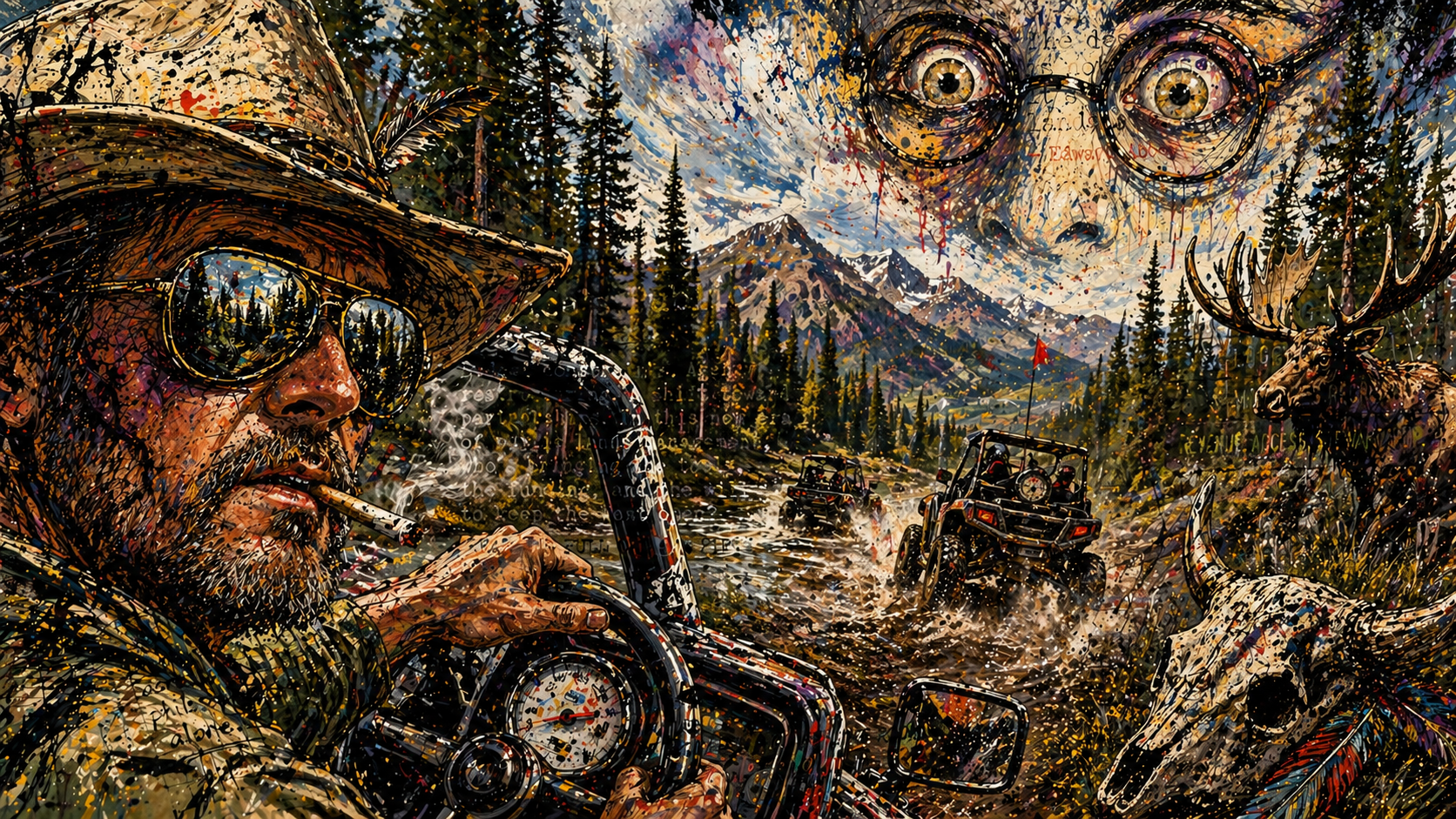
Amid agency challenges, motorized recreation groups have quietly built an effective support system. Through self-imposed registration fees and organized crews, riders have consistently funded and completed vital maintenance before agencies could act. This active stewardship, unlike passive policy discussions, ensures on-the-ground maintenance when it is most needed, and their volunteer labor is now critical as agency capacity diminishes.
Agencies now seem to be entering a 'maintenance economy,' focused less on planning and more on partnership. As responsibilities shift and budgets tighten, those who provide hands-on support, especially motorized recreation users, become increasingly important. Their willingness to fund and conduct maintenance directly positions them as essential partners in managing public lands when resources are stretched.
For fifty years, preservation dominated American public lands. Preservation reshaped the national imagination in ways worthy of respect, even from those who chafed under its rules. Entire ecosystems survived because citizens insisted. Rivers still run where dams were once planned. Wildlife still moves where it might have vanished. But preservation depended on the assumption that agencies would always have the capacity to manage landscapes for values that did not produce maintenance budgets. That assumption looks less certain as offices consolidate, responsibilities shift, and field units quietly learn to do more with less. This sounds heroic in briefing papers, but it is exhausting when you are trying to keep a district running through another lean year.
Motorized recreation enters this moment differently. Most people outside the culture may not understand why. Riders have never truly believed someone else would take care of everything. Snowmobile grooming programs are among the most successful cooperative funding structures in public-lands management. In these programs, users tax themselves, organize locally, and maintain winter access across large, remote landscapes. Even the most dedicated federal workforce could not manage these on its own. It is difficult to watch volunteers rebuilding a trail bridge in sleet or grooming at dawn and view motorized recreation as just a pastime. Instead, you see infrastructure built by citizens who aim to be part of the landscape, not just visitors passing through.
As agencies begin shifting from operators to coordinators and from regulators to partners—a transition that happens slowly, quietly, and without fanfare—the advantage moves toward the people already structured to help carry the weight. That advantage is not guaranteed or permanent, but it is real enough to notice if you spend time where the roads end and the trailheads begin. Motorized recreation has spent decades developing the habits of stewardship, not because anyone required it, but because access in the West has always depended on users' willingness to show up with tools rather than arguments. When budgets tighten and responsibilities shift, those habits begin to look less like hobbies and more like solutions. This means the future belongs automatically to riders, or that conservation values disappear simply because appropriations become uncertain. Public lands remain complicated places shaped by competing needs and fragile ecologies, and citizens who love them for different reasons that are often equally sincere. But history suggests that landscapes tend to lean toward the people who help maintain them, and if the current reorganization inside federal land agencies marks the beginning of a long transition toward partnership-driven stewardship rather than agency-driven management, then motorized recreation may find itself standing closer to the center of the conversation than it has been in a very long time—not because it demanded a place there, but because it brought fuel, tools, and a willingness to work when the landscape asked for help.
Reprint Permission: This article may be shared or republished in full, provided it is reproduced exactly as originally published and includes the author’s byline. No edits, excerpts, rewrites, summaries, translations, artificial intelligence-generated versions, derivative works, or manipulated versions are permitted without prior written permission from the author.
By Jeff Knoll Find me on LinkedIn @ https://www.linkedin.com/in/jeff-knoll-b5632437/
Originally published at: https://www.onevoicerec.org/news
© 2026 Jeff Knoll. All rights reserved except as expressly permitted above.