People Don’t Want to Join. They Want to Belong.
By Jeff Knoll
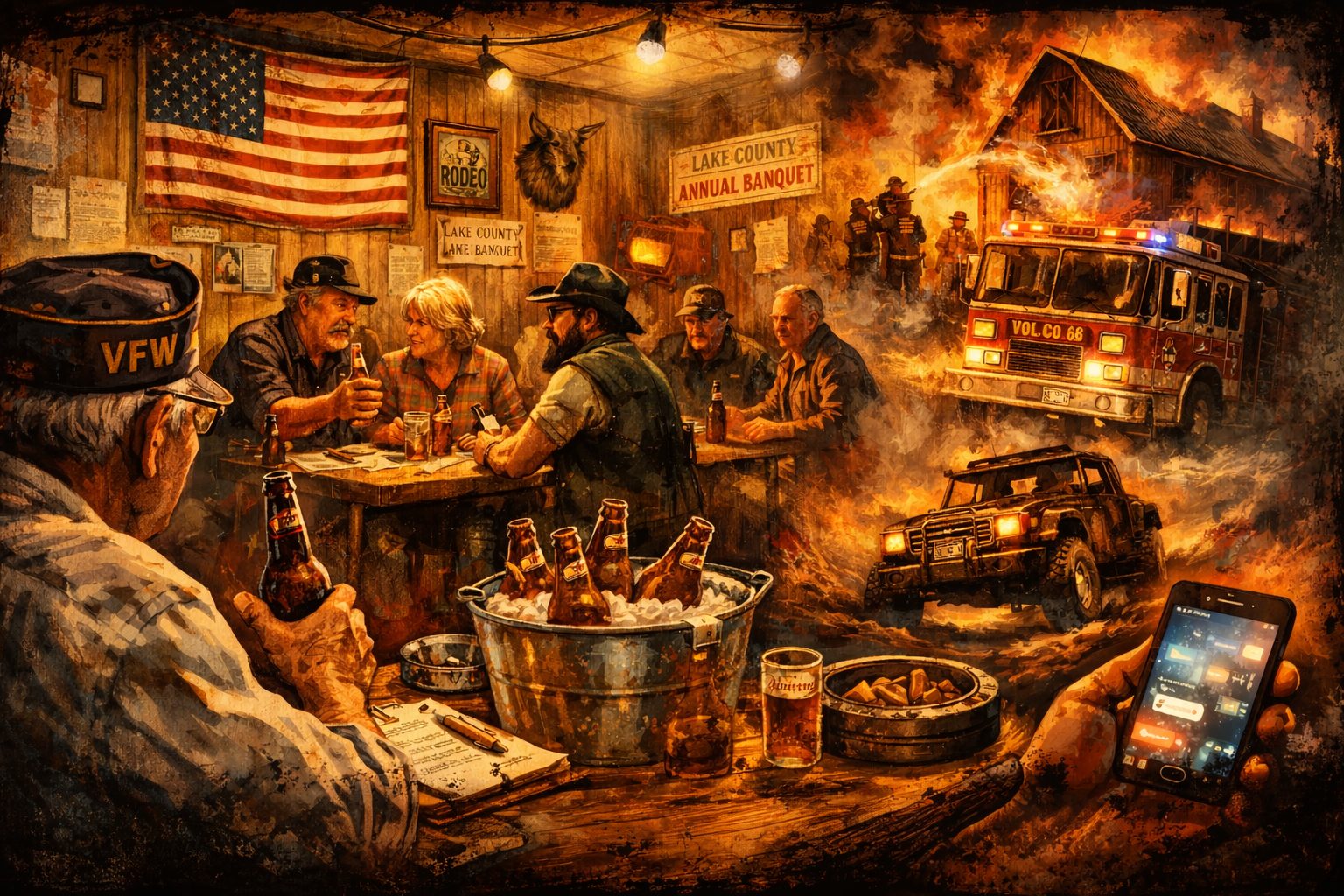
Last night, I sat in the Polson, Montana, VFW, often called the cheapest place to drink, just ahead of the Elks Lodge, which I also belong to. Inside, the American flag and wood paneling reflect decades of community, and the bartender’s prices show nobody’s there for profit.
The gathering was for the Polson Fairgrounds committee. The evening had the familiar mix of planning, socializing, and a shared reminder that a community survives where people show up.
Conversations circled around the rodeo, annual banquet, and the town events that hold the community together. A county commissioner stopped by—an event of local significance. People laughed, debated, and shared ideas for the good of their community.
What struck me wasn’t the agenda or the logistics. It was the simple fact that nobody looked burdened by the obligation of being there. These weren’t people dragged into a committee meeting by a corporate calendar invite. They were there because the fairgrounds mattered to them, because the rodeo mattered, because the town mattered. They were there because they belonged.
Watching the room, I recalled my childhood when my town needed a volunteer fire department. The answer was simple: raise money through dances, raffles, and BBQs—where half the town attended, children played, and adults gathered to talk.
One man, Chester, claimed these events were just excuses to drink. That seemed fair—until his barn caught fire.
When his barn burned, the new Volunteer Fire Company came fast. Volunteers became heroes. Objections vanished when help was needed.
That story came to mind in the VFW hall after an earlier conversation about the decline of the OHV community. An offhand comment from that day has stuck with me since.
People don’t want to join anymore— but they want to belong.
The difference between joining and belonging is shaping our communities. Today, many people want a sense of identity but not the commitment that comes with it.
The difference between those two ideas is at the heart of our current cultural shift: for most of the twentieth century, belonging in America meant actively joining groups like the Elks, Rotary, 4WD club, or trail association. Membership involved paying dues, attending meetings, and pitching in at events such as pancake breakfasts or the county fair. It wasn’t glamorous, but it worked. These institutions built baseball fields, funded volunteer fire departments, maintained trails, and quietly held communities together.
Somewhere along the way, that model started to break down. The sociologist Robert Putnam noticed the shift decades ago and described it in a book called Bowling Alone. His observation was simple but unsettling. Americans still bowl. They just stopped joining bowling leagues. The same pattern has repeated itself across nearly every corner of civic life. Membership in service clubs has declined. Volunteer organizations have aged out. Local institutions that once thrived on participation now struggle to fill leadership roles.
The desire for connection remains strong. People want community and the identity it brings but are more resistant to traditional structures—like dues, meetings, and responsibilities—that once made those communities work.
That tension is clear in the off-road world. The OHV community is enormous. Millions of people identify as off-road enthusiasts, and entire industries exist to build machines capable of crawling over rocks, crossing deserts, and climbing mountains. But the number of people who actually join advocacy organizations, volunteer for trail maintenance, attend land-use meetings, or donate to defend access to public land is remarkably small.
Everyone wants to belong and embrace community culture. Few want to join the organizations that create and maintain that sense of belonging.
Which is a dangerous recipe. Trails don’t maintain themselves. Access to public land isn’t defended by hashtags. The work of protecting those things still relies on the same messy civic machinery that was sitting in that VFW hall last night, committees, fundraisers, banquets, rodeos, and the occasional cooler of cheap beer sitting in a bucket of ice while a group of volunteers figures out how to keep the whole thing moving.
Driving home, I realized community in America persists. You can still find it in places like the Polson VFW or Elks Lodge, where people gather because they care, not because they must. Yet as culture shifts toward the comfort of belonging, these rooms grow quieter. True community needs people to show up, not just feel included.
Belonging offers identity and connection. But lasting community—fairgrounds, trails, fire departments—exists only because people take responsibility for joining. True belonging grows from participation. When the barn caught fire, those who joined were ready. Hashtags can’t save burning buildings.
Reprint Permission: This article may be shared or republished in full, provided it is reproduced exactly as originally published and includes the author’s byline. No edits, excerpts, rewrites, summaries, translations, artificial intelligence-generated versions, derivative works, or manipulated versions are permitted without prior written permission from the author.
By Jeff Knoll Find me on LinkedIn @ https://www.linkedin.com/in/jeff-knoll-b5632437/
Originally published at: https://www.onevoicerec.org/news
© 2026 Jeff Knoll. All rights reserved except as expressly permitted above.