The Trail We Leave Behind
By Jeff Knoll
There are places that become woven into a person's life so gradually that you never notice when they stop being destinations and become old friends. The Rubicon Trail is one of those places. You don't simply drive the Rubicon. Every trip feels strangely familiar, even though the people change, the vehicles evolve, the obstacles shift a little with every hard winter, and another generation arrives convinced it has discovered something entirely new.
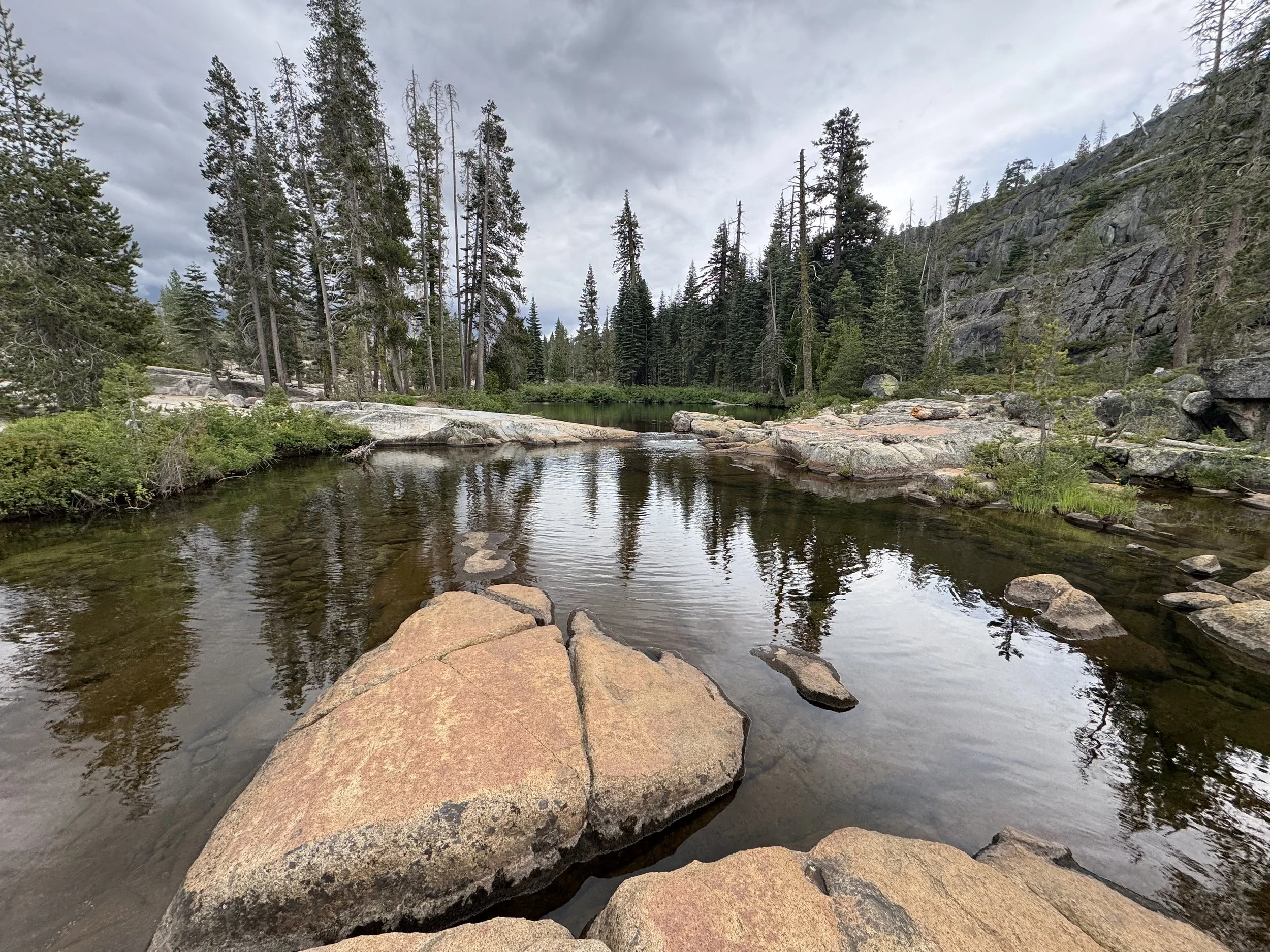
Last week, I had the privilege of returning with an old friend.
Bart Dixon and I have shared enough miles together that I stopped counting years ago. We've wandered across the slickrock of Moab, chased the dust south through Baja, and stood together in Johnson Valley when King of the Hammers was nothing more than an idea bold enough to attract a few believers and just reckless enough to work. Bart was there when the first green flag dropped. He was one of the early adopters who looked at an unlikely idea and decided it deserved a chance.
For all those adventures, he'd never driven the Rubicon.
There was something deeply satisfying about watching him experience it for the first time. When you've fallen in love with a place, introducing someone else to it becomes almost as rewarding as discovering it yourself. You begin watching their eyes instead of your own tires. You know exactly where they'll stop without saying a word. You recognize that quiet grin when the granite finally gives way to another alpine meadow, because you remember wearing the same expression yourself.
Somewhere along the trail, I caught myself saying, almost instinctively, "Let's stay on the trail."
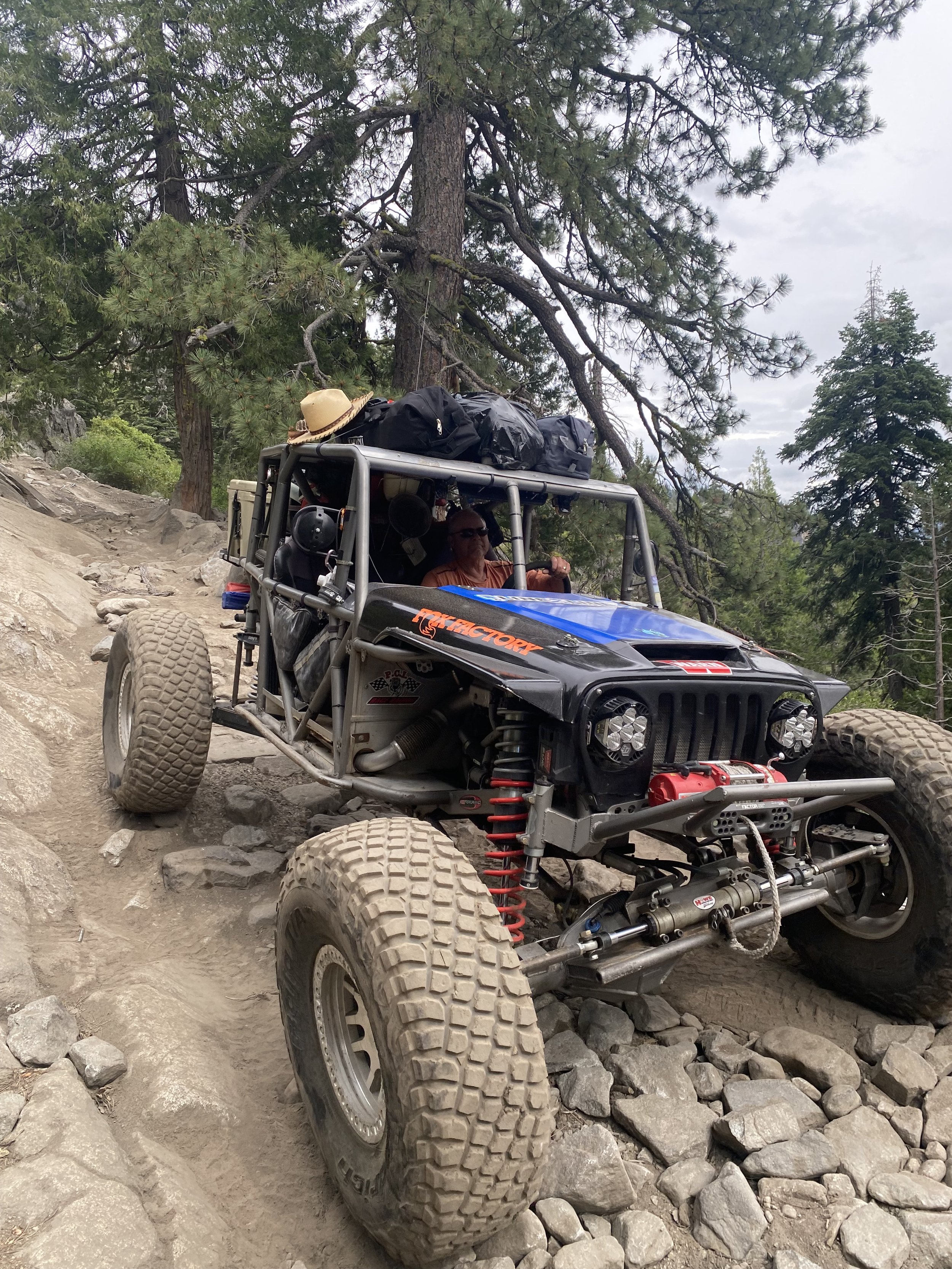
Bart hadn't drifted off it. He wasn't looking for another line. I wasn't correcting him. The words simply escaped because they had been spoken to me decades earlier by men who understood something I was still too young to appreciate. They weren't teaching me where to place a tire. They were teaching me how to belong.
That thought stayed with me longer than I expected.
Only a few days earlier, the internet had erupted over another controversy born at Little Sluice. Organizations responded to organizations. Opinions multiplied faster than facts. Old disagreements found fresh audiences. Before long, it became difficult to tell where the original incident ended and decades of accumulated history began. Social media has an uncanny ability to make every disagreement feel immediate while quietly stripping away everything that gave it context. That was the part that stayed with me: how quickly a conflict can lose its lesson when the context disappears.
By the time I arrived on the Rubicon, I realized I wasn't carrying an opinion so much as a question.
Had we forgotten what this place was trying to teach us?
The trail itself offered no answer. Granite rarely does. It simply sat there, indifferent to our arguments, asking the same question it has asked every driver for generations.
Who are you when no one is keeping score?
That question feels different today than it did twenty-five years ago.
When I was younger, we all admired people who pushed boundaries. I certainly did. We built increasingly capable machines because difficult things were worth attempting. We idolized clubs like the Pirates of the Rubicon because they made impossible obstacles seem possible. There was healthy competition, occasional foolishness, and enough youthful confidence to convince most of us that consequences belonged to older people. If I'm honest, more than a few poor decisions were encouraged by cold beer and the certainty that tomorrow would somehow sort itself out.
Age has a peculiar way of changing what you admire.
I still appreciate extraordinary driving. I still smile when I see ingenuity behind the wheel. I still believe competition has its place. After all, I helped create Ultra4 racing because I believed our sport could become something more than anyone imagined.
What has changed isn't my appreciation for capability. It's my appreciation for restraint. There is a difference.
The older I become, the more I realize that some of the finest drivers I've ever known were remarkable not because of what they could do, but because they understood when not to do it. They recognized that every place has a personality. A desert race course asks something entirely different of you than an alpine trail traveled by families from around the world. Wisdom isn't measured by whether your vehicle can do something. Wisdom is recognizing what a place deserves from you.
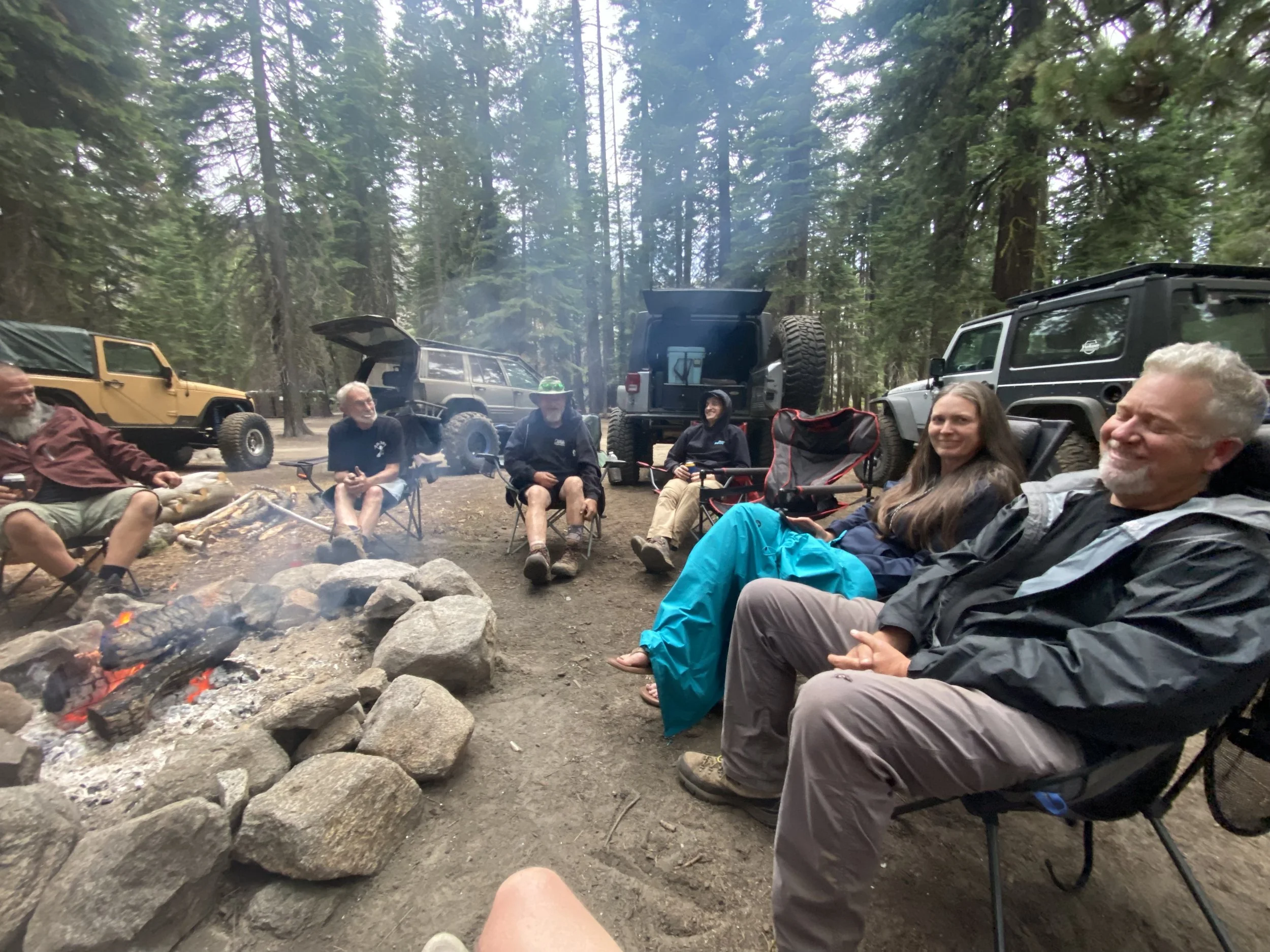
As Bart and I worked our way across the granite, I couldn't help noticing how much the Rubicon has changed. I heard conversations in languages I couldn't identify. Young families carefully picked their way over obstacles while retirees sat comfortably beside campfires in restored Land Cruisers that had probably seen more history than most museums. Brand-new Jeeps mixed with purpose-built crawlers. Brand-new enthusiasts shared the trail with people who had been coming here since before lockers were common. The Rubicon has become something much larger than a difficult four-wheel-drive trail.
It has become a gathering place.
Perhaps that is why I felt less anger than sadness while reading the debates online. If the conflict was teaching us anything, I worried we were missing it. Every person involved seemed convinced they were protecting something they loved.
Plato once observed that every soul is deprived of truth against its will. Whether he was entirely right hardly matters to me anymore. What matters is the generosity hidden inside the idea. It asks us to begin with the possibility that people are not choosing conflict because they cherish conflict. Perhaps they're simply seeing different parts of the same mountain. Perhaps experience has shown each of them a different face of the granite.
That possibility changes the conversation. It invites curiosity before condemnation.
Marcus Aurelius offered another thought that has stayed with me over the years: What is not good for the hive cannot be good for the bee.
I wonder what would happen if that became the question we asked before pressing the throttle, before drafting another public statement, before posting another video, or before firing off one more comment that feels satisfying for a moment but lingers on the internet for years.
Is this good for the hive?
Not good for my organization. Not good for my business. Not good for my reputation.
Good for the hive.
That seems like a remarkably difficult question in an age that rewards individual attention above almost everything else. Somewhere along the way, attention became a form of currency, and many of us, often without realizing it, began trading pieces of our collective reputation for small deposits into our personal accounts. The exchange rate looked favorable at the moment. More followers. More engagement. More applause. Yet every transaction quietly withdrew something far more valuable from a community that has spent generations earning the public's trust.
I've seen this pattern before. Chocolate Thunder has occasionally become more theater than obstacle. Little Sluice has now become another stage. I'm certain there will be another famous obstacle after that. The names will change because they always do. What concerns me isn't the location. It's the pattern. Cameras have become spectators that never blink, and when enough of them gather, the temptation to perform can begin to outweigh the quiet satisfaction of simply experiencing a remarkable place.
None of that means we should stop celebrating adventure or stop listening to what it is trying to teach us. Quite the opposite. Adventure is why we're here.
But adventure has always carried a silent companion called responsibility. The foundation of a free society has often been described with a simple idea: your freedom to swing your fist ends where another person's nose begins. Public land asks something remarkably similar. My freedom to enjoy this place ends where my decisions begin diminishing someone else's opportunity to enjoy it tomorrow.
That isn't government. That isn't regulation. That's stewardship.
Those lessons used to be taught by clubs almost without anyone noticing. Around campfires. During trail repairs. While waiting for someone to replace a broken axle shaft. Older members didn't lecture very often. They simply lived in a way that younger members naturally wanted to imitate. Somewhere along the way, many of those classrooms quietly disappeared. The magazines faded. Clubs became smaller. Mentors became harder to find. The internet eagerly filled the space, but algorithms have never cared whether they are raising good stewards or simply successful performers.
Which leaves us with a choice. Not about who was right last week. That answer will never satisfy everyone. The real choice is whether we are still willing to become the mentors we once needed ourselves.
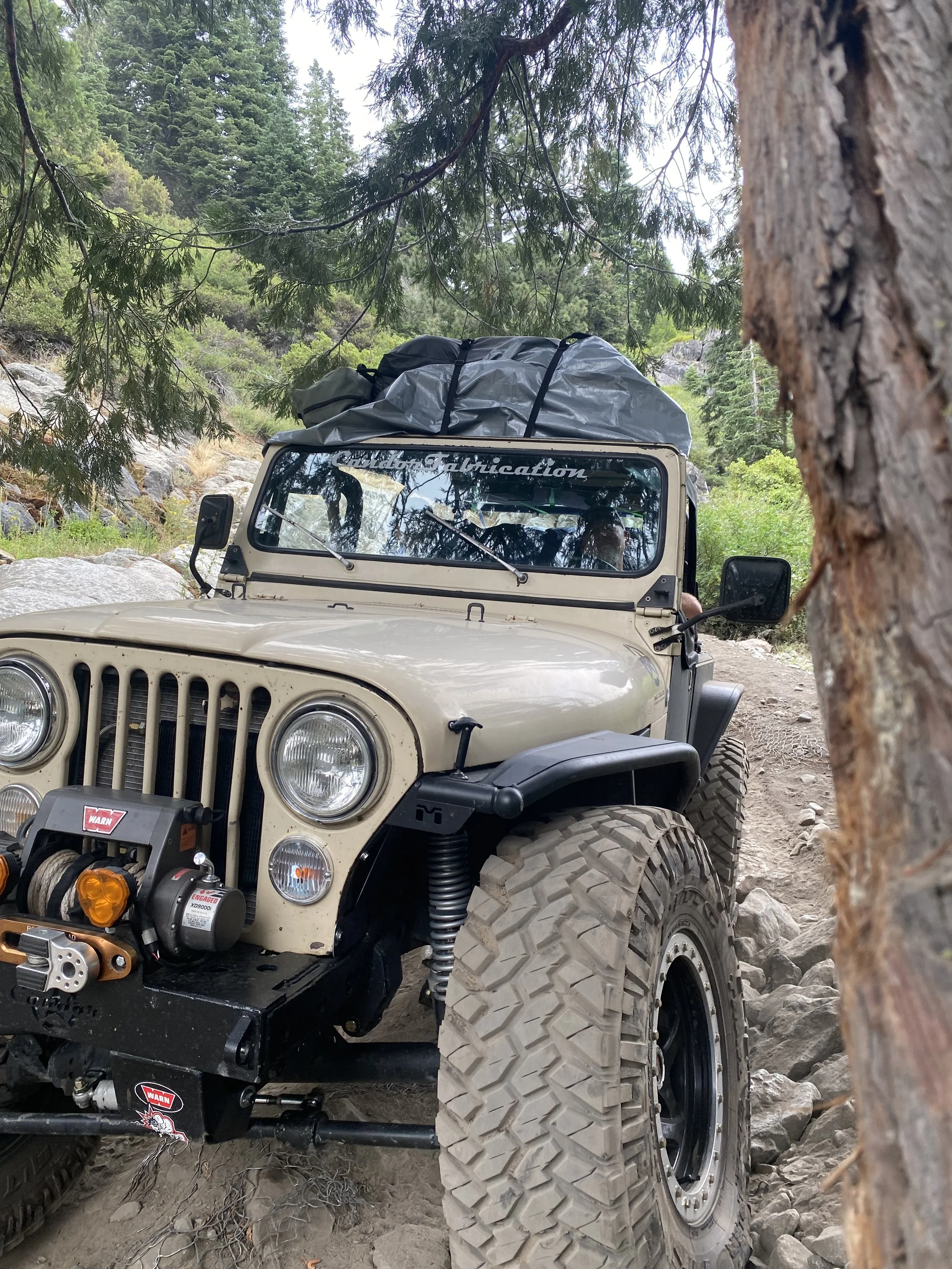
The Rubicon doesn't belong to Jeep Jamboree. It doesn't belong to the Rubicon Trail Foundation. It doesn't belong to racers, businesses, volunteers, influencers, or people like me who have been fortunate enough to spend a lifetime around this community. It belongs to none of us.
The Rubicon Trail is on loan from our grandchildren.
That sentence has been following me around ever since I finished the trail. It keeps changing the way I look at things. If the trail is only on loan, then every volunteer weekend becomes a payment on a debt. Every newcomer we welcome instead of ridiculing becomes an investment. Every time we choose patience over performance, conversation over condemnation, or stewardship over spectacle, we make another small investment toward a future we may never personally enjoy.
When Bart and I finally loaded the Jeep, neither of us spent much time talking about the arguments we'd left behind on the internet. We talked about the lake. The granite. The people we'd met. The history we'd remembered. The simple privilege of sharing a place that had somehow managed to exceed expectations despite carrying more legend than almost any trail has a right to bear. And that, more than the arguments, is what I carried home.
As we pulled away, I looked once more toward the pines and found myself wondering what the Rubicon would look like twenty-five years from now. I doubt I'll recognize every vehicle. I probably won't understand every new technology. The conversations around the campfire will change, just as ours have changed since the first green flag dropped in Johnson Valley.
I hope one thing never does.
I hope an older driver, riding beside a friend experiencing the Rubicon for the first time, still hears himself say, almost without thinking, "Let's stay on the trail." Not because someone wrote it in a rulebook. Because somewhere, years before, another old-timer quietly passed that lesson on to him.
That's how cultures survive. Not by winning arguments.
By earning the privilege of being remembered.
Reprint Permission: This article may be shared or republished in full, provided it is reproduced exactly as originally published and includes the author’s byline. No edits, excerpts, rewrites, summaries, translations, artificial intelligence-generated versions, derivative works, or manipulated versions are permitted without prior written permission from the author.
By Jeff Knoll Find me on LinkedIn @ https://www.linkedin.com/in/jeff-knoll-b5632437/
Originally published at: onevoicerec.org
© 2026 Jeff Knoll. All rights reserved except as expressly permitted above.